Verdict: Build an Everyday Technical Wardrobe Around Use, Not Hype
AI-generated illustration — not a retailer product photo.
The best technical streetwear staples are rarely the most attention-grabbing ones. For a UK everyday wardrobe, start with the situations you repeat: a damp walk to the station, a warm bus or office, an evening dog walk, or a weekend route that shifts between pavement and park paths. Then choose protection, layering and footwear accordingly.
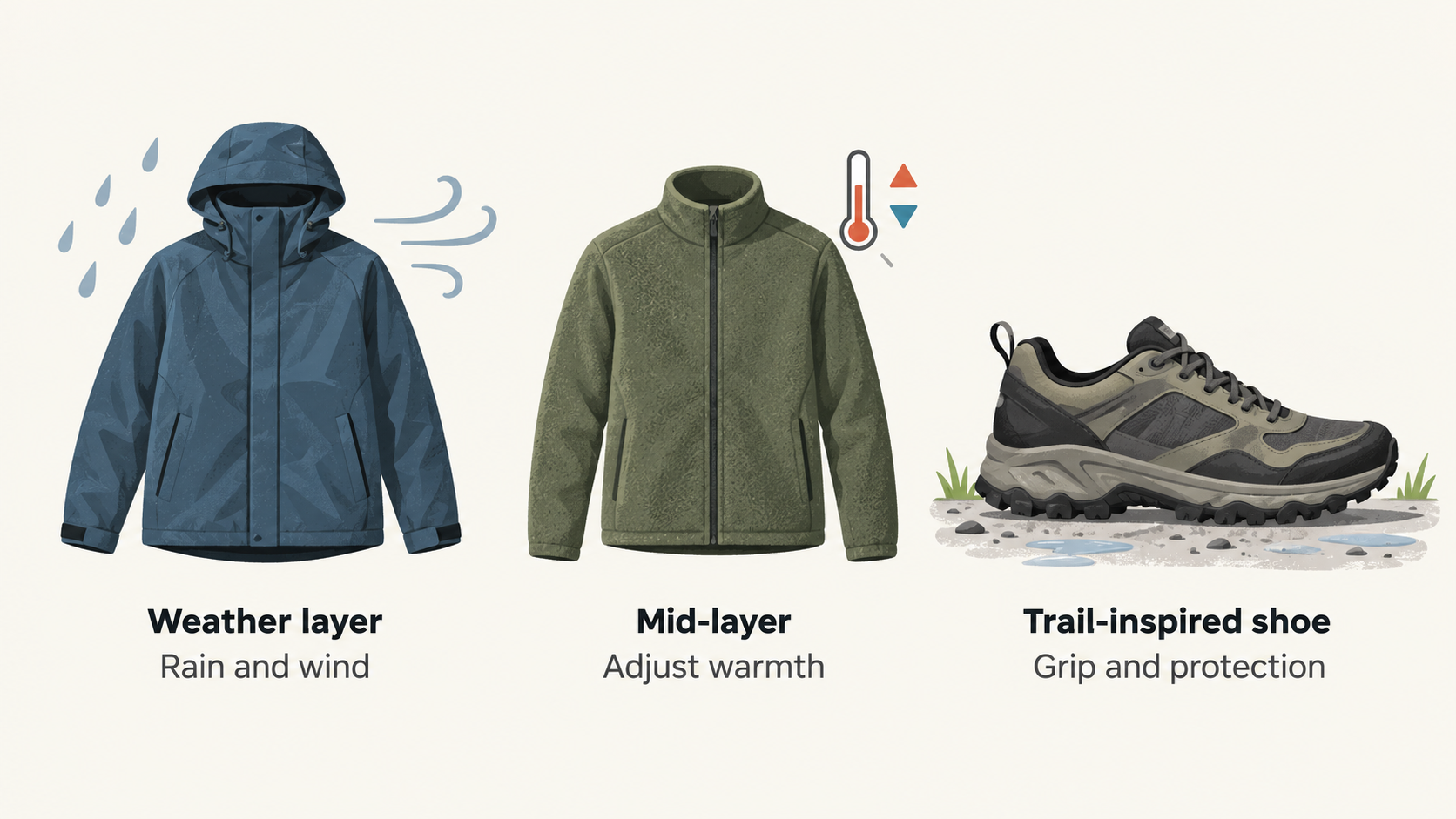
Think in a three-part system. A weather layer manages rain and wind; a mid-layer lets you adjust warmth without rebuilding the whole outfit; and a trail-inspired shoe should provide the amount of grip and protection your usual surfaces actually call for. That is more useful than trying to assemble a universally “technical” look.
Value comes from cost per wear, not a badge or a launch story. A shell that is too delicate for your commute, an insulated jacket that is too warm indoors, or a heavily lugged shoe used only on smooth pavements can all become expensive dead weight. Prioritise fit, care requirements, return terms and likely weekly use before committing.
What Counts as Technical Streetwear for UK Everyday Use
AI-generated illustration — not a retailer product photo.
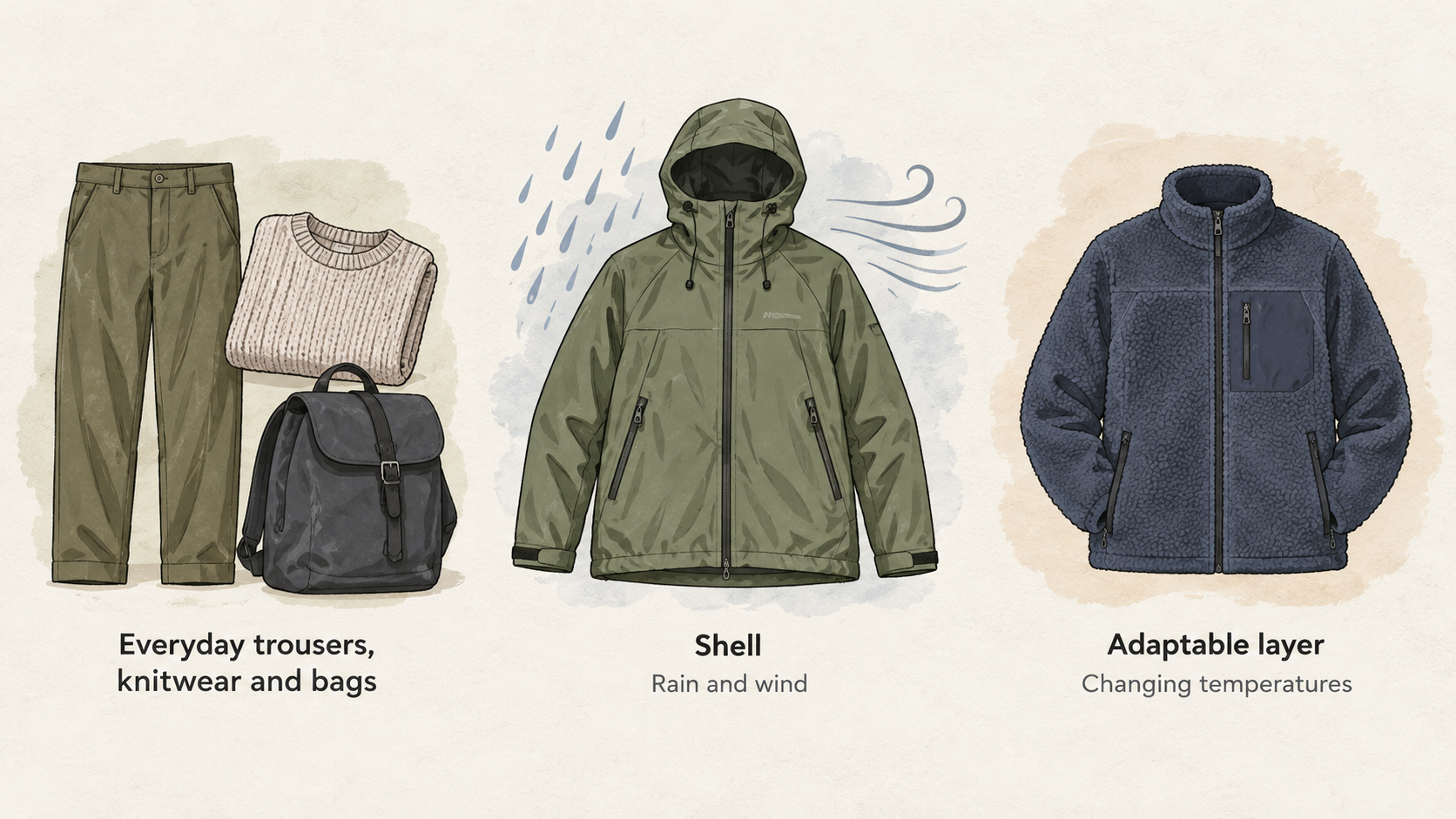
Technical streetwear sits between performance clothing and ordinary casualwear. It borrows practical features—weather-resistant fabrics, adjustable hoods, zipped pockets, insulation, breathable panels or grippier outsoles—while remaining easy enough to wear with everyday trousers, knitwear and bags.
For most readers, the useful categories are straightforward. A shell is the outer barrier for rain and wind. A fleece, light insulated jacket or overshirt is the adaptable layer that handles changing temperatures. A trail-inspired shoe brings a more protective upper, stable platform or more assertive outsole than a conventional lifestyle trainer, without necessarily being a specialist trail shoe.
The category label alone does not guarantee a better purchase. Look at the product page rather than the styling: fabric composition, care instructions, pocket layout, stated weather protection, size guide and return window all tell you more about daily ownership. Independent comparative testing of men’s clothing also treats rain jackets, insulation, fleece and other layers as distinct use cases rather than interchangeable fashion categories.
A good everyday technical piece should solve a routine problem while still fitting your wardrobe. If it only works for a dramatic weather forecast, a specific outfit or a short walk, it may be less versatile than its technical appearance suggests.
Jackets and Layers: The Strengths Worth Paying For
AI-generated illustration — not a retailer product photo.
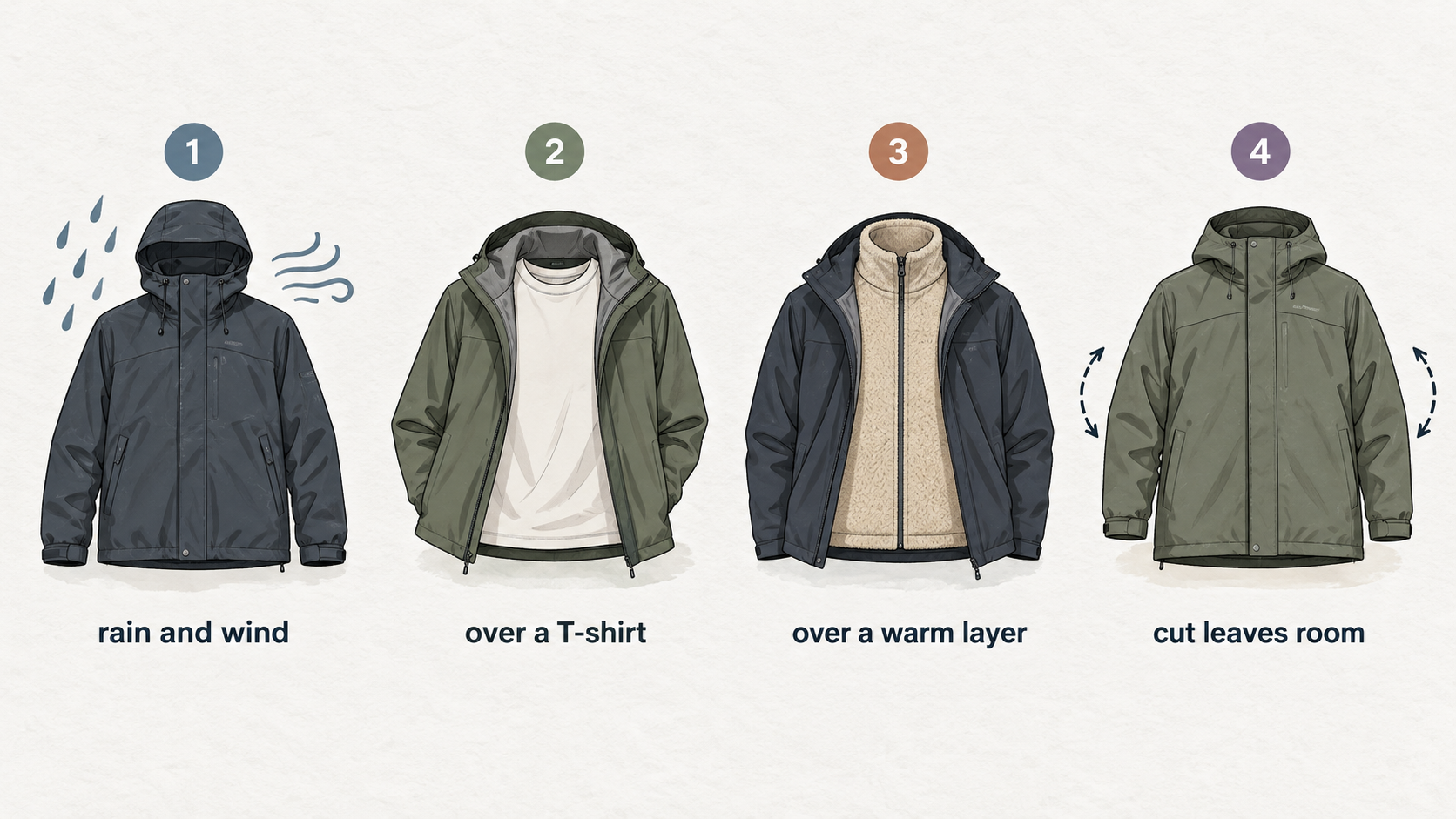
Start by deciding what the outer layer has to do. A shell is the sensible first choice when rain and wind are the recurring problem and you already own knitwear or fleece to wear beneath it. Its advantage is modularity: on a mild wet day it can be worn over a T-shirt; on a colder one, it can sit over a warm layer. Check that the cut leaves room for that second scenario before removing tags.
An insulated jacket is more self-contained. It can be convenient for cold, stop-start commutes and casual outdoor time, but it is less adaptable once you move into heated transport or indoor spaces. Fleece usually offers a softer, easier mid-layer option, though it should not be treated as a substitute for a rain shell when sustained wet weather is expected. An overshirt may be the neatest silhouette for dry, lightly cool days, but usually earns its place through layering and pocket utility rather than maximum weather defence.
Details matter more than a long feature list. Check whether the hood adjusts in a way that will stay put in wind; whether the front closure and pockets suit how you carry phone, keys and travel card; and whether cuffs and hem can be adjusted without making the jacket awkward. Read the composition and care label before buying: coated, taped or highly technical constructions can have different care burdens from a simple woven layer.
Fit is the biggest online-purchase risk. Compare your body measurements with the brand’s chart, then read the garment measurements where available. Try the jacket with the thickest layer you genuinely expect to wear underneath. Raise your arms, sit down and zip it fully; restricted shoulders, a collar that presses on the chin or pockets hidden by a backpack strap are useful reasons to return it. Patagonia’s UK menswear category groups jackets and vests, but individual specifications and availability should still be checked on the relevant product page at the time of purchase.
Limitations: Where Technical Pieces Can Fall Short
Technical clothing is not automatically low-maintenance or universally comfortable. More protection can mean less airflow during a fast walk, more fabric noise, a bulkier silhouette or longer drying time after washing. A very light shell may pack down well but be less pleasant over bare arms; a heavily insulated jacket may be excellent outside and inconvenient for a crowded train.
Care is part of the price. Before ordering, check the washing instructions, whether the item needs special treatment to maintain its finish, and whether repairs are realistically available in your area. Do not assume that “durable” means carefree: abrasion-prone areas, delicate membranes and bonded details deserve closer attention if you cycle, carry a heavy bag or wash garments frequently.
The same restraint applies to shoes. A trail-oriented outsole can be useful on wet or uneven ground, yet pronounced lugs may feel unnecessary on smooth floors and can be a poor match for someone who spends long days standing in an office. A protective upper may also feel warmer or stiffer than a breathable urban trainer. If your feet are narrow, wide, sensitive at the toes or dependent on a particular insole, fit policy matters at least as much as outsole styling.
Read the return conditions before outdoor wear. A short indoor try-on, with your normal socks and any orthotic, is the safest time to assess heel hold, toe room and pressure points.
Trail-Inspired Shoes: Match the Sole to Your Actual Routes
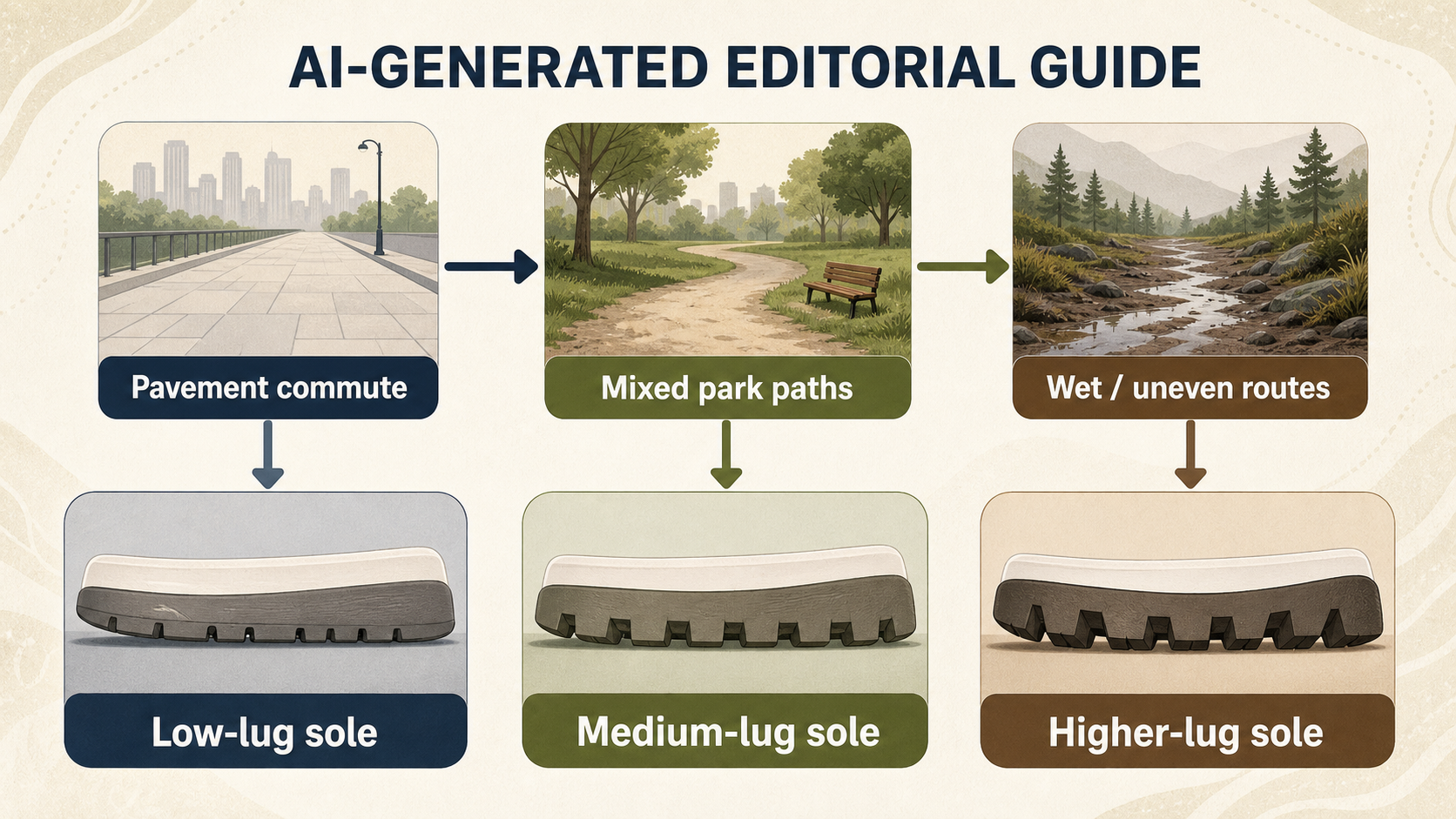
A trail-inspired shoe makes sense when your week includes more than clean pavement: wet park paths, gravel shortcuts, canal-side walks, uneven travel routes or frequent poor weather. It is not a blanket upgrade over a lifestyle trainer. The right sole is the one that balances your route, comfort and stability without bringing more bulk and grip than you can use.
Use a route-first guide. For a pavement-heavy commute with occasional dry paths, a lower-profile outsole and flexible everyday build are often the proportionate choice. For mixed park paths and variable surfaces, look for a stable platform, dependable heel hold and moderate tread rather than the deepest possible lugs. For regularly wet, loose or uneven routes, a more protective upper and higher-grip outsole may be justified—but a dedicated trail shoe can be the clearer choice if those conditions are the main purpose.
Cushioning should be judged in person where possible. More cushioning can feel comfortable, but it can also change stability and make a shoe feel less precise on uneven ground. Check the upper for the weather tolerance you actually need, not an imagined expedition. A water-resistant-looking shoe may still be warmer, slower to dry or less breathable than your daily routine allows.
Try shoes on late in the day if you can, wearing the socks you normally use. Walk on a hard floor, test both feet, and confirm that the heel does not lift while the toes have room on a downhill step. Leave enough space for natural foot swelling, but do not rely on a break-in period to cure rubbing or a cramped forefoot. If you need dedicated grip, ankle support or repeated off-road mileage, choose from true trail footwear rather than assuming that a trail-inspired casual shoe carries the same brief.
Alternatives That May Suit a Simpler Everyday Wardrobe
If your routine is mainly urban, a conventional raincoat or simple waterproof jacket may be a better-value answer than a highly featured shell. It can offer the coverage you need with a silhouette that suits workwear and casual clothes, while asking less of you in fit adjustments and technical care.
For warmth, an ordinary fleece, cardigan or light quilted layer can be the more proportionate option when you only need occasional insulation. These choices can be easier to combine with existing clothes and may be simpler to replace or maintain. The trade-off is that they may not deliver the same weather-focused construction or pocket utility as a specialist outer layer.
For footwear, an everyday trainer is often enough for smooth streets, commuting and indoor-heavy days. A leather shoe or boot may suit readers who value a smarter look and are prepared for its own care routine. None of these alternatives is inherently inferior; they are better purchases when technical protection, trail grip or rapid layer changes are not recurring needs.
Shortlist by Routine: Four Practical UK Everyday Setups
Wet commute: Shortlist a shell with a usable hood, secure pockets and enough room for a sweater or fleece. Check fabric and care information, then test the fit over your normal commute layer. Pair it with footwear that suits the walk from station to door rather than choosing aggressive tread by default.
Variable-temperature days: Choose a light shell plus a removable warm layer, or a light insulated jacket if you prefer one-piece simplicity. The key question is whether you can stay comfortable when moving between rain, public transport and heated interiors. Avoid buying an insulation level you cannot regulate.
Casual weekend walking: For routes that mix pavement and park paths, consider a shoe with stable heel hold, moderate grip and enough toe room for longer walks. Combine it with a layer that can be removed and carried easily. If the route is reliably muddy, steep or loose, move from trail-inspired styling to footwear built explicitly for trail use.
Mixed-surface travel: Prioritise versatility: comfortable all-day footwear, a weather layer that works over different outfits, and pockets that keep essentials accessible. Weight, packability and drying time may matter more here than maximum protection.
Before purchasing any setup, run the same checklist: compare the size chart with your measurements; confirm material composition; read care instructions; check the return window and any condition restrictions; and estimate how often you will realistically wear each item. That final step helps prevent a technically impressive purchase from becoming an occasional one.
Frequently Asked Questions
Do I need a waterproof shell for everyday UK wear, or is a water-resistant jacket enough?
Choose based on exposure. A water-resistant layer can be enough for brief showers and short urban journeys if you have a dry fallback. A shell is the more sensible option when rain and wind are regular parts of your commute or when you need to stay out for longer. In either case, check the product’s stated protection and care guidance rather than assuming the label alone settles the question.
How should a technical jacket fit if I want to layer underneath it?
It should accommodate the warmest layer you expect to use without restricting shoulder movement, closing tightly at the neck or riding up when you sit. Try it indoors with your usual knitwear or fleece, use the adjustments, and compare your measurements with the brand’s guidance. If the fit only works over a T-shirt, it is not a dependable layering jacket for your routine.
Are trail-inspired shoes practical for daily city walking and commuting?
They can be, especially where routes include wet paths or uneven shortcuts. But a conventional trainer may be lighter and more comfortable for a pavement-and-indoor routine, while a dedicated trail shoe can be more appropriate for repeated off-road use. Assess tread, cushioning, upper warmth and fit against the surfaces you actually cover each week.
How can I check whether a technical garment will be easy to care for and return?
Read the care label and retailer policy before ordering, not after wearing it outside. Look for washing and drying requirements, guidance for maintaining any finish, the length of the return window, and whether tags or unworn condition are required. Keep the indoor try-on focused on movement, layering and pocket access until you are confident it earns a place in your wardrobe.
Ready to narrow the options? Build a shortlist from your weekly routes, weather exposure and most-used layers before comparing individual products.
Sources
Related reading
- The North Face vs Patagonia: outerwear fit, materials, care, and value
- The North Face review: strengths, limits, and alternatives for UK everyday outerwear
- Salomon review: trail shoe fit, care, and everyday crossover trade-offs
- How to choose streetwear jackets and trail shoes for fit, layering, and daily use
Editorial information: About our editorial team · Read our editorial policy · Read our affiliate disclosure.