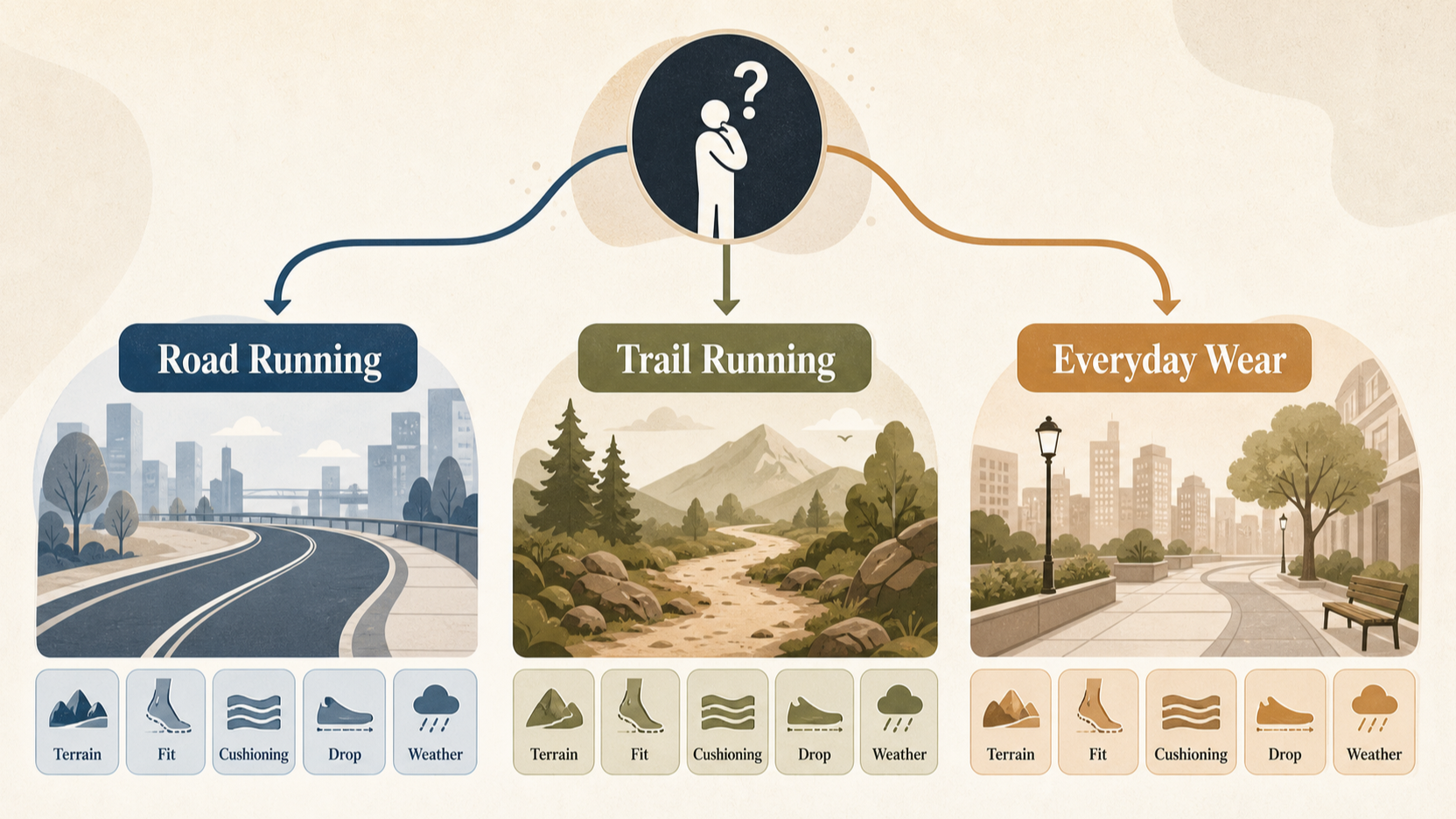
Choosing outerwear and trail-inspired footwear online is easier when you begin with what you will actually do in them. A jacket that looks right on a product page may feel restrictive over your usual knitwear; a shoe that looks at home in the city may not suit the surface, distance or movement you have in mind. Use measurements, intended layers and an indoor fit check to make the purchase decision more defensible.
Start With Your Daily Use Case
AI-generated illustration — not a retailer product photo.
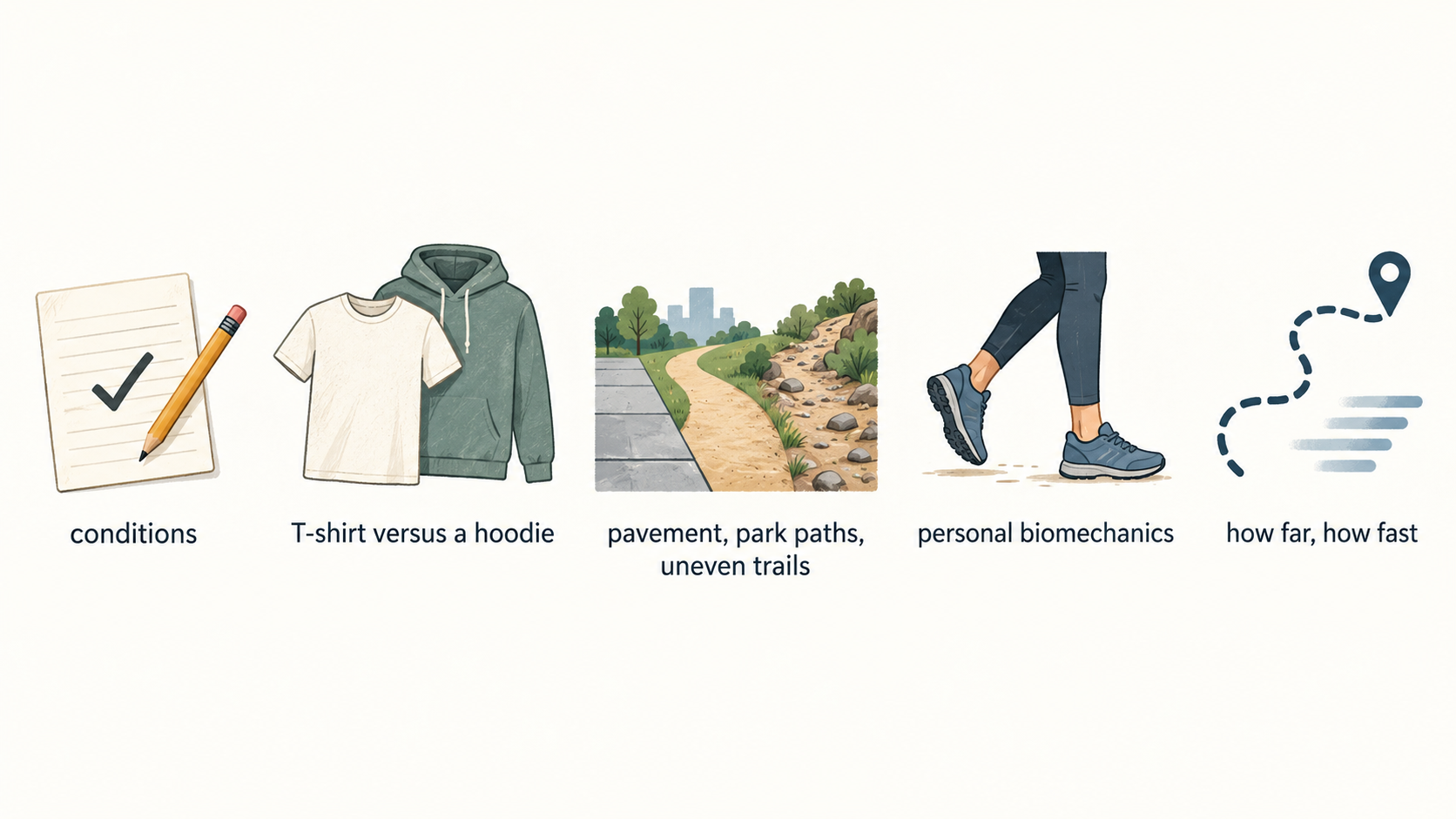
Before comparing colourways or technical details, write down the conditions the item needs to handle. For a jacket, that might mean commuting, weekend walking, travel, standing outside, or wearing it over a T-shirt versus a hoodie. For footwear, identify whether most use will be pavement, park paths, uneven trails, or everyday walking.
The official running-shoe guidance starts with the way you run: personal biomechanics, where you run, how far, how fast, and the feel you prefer from the terrain. That is a useful order of thought even when a trail-inspired shoe is mainly a lifestyle purchase. A familiar size label or a technical-looking upper cannot answer those questions for you.
Make a short priority list: the layers you normally wear, your likely weather, how much walking or running you will do, the surfaces involved, and the features you would genuinely use. Then compare the product page, measurement chart and returns terms against that list. It keeps the decision focused on fit and usefulness rather than a launch image alone.
Check Jacket Layering Room Before You Order
AI-generated illustration — not a retailer product photo.
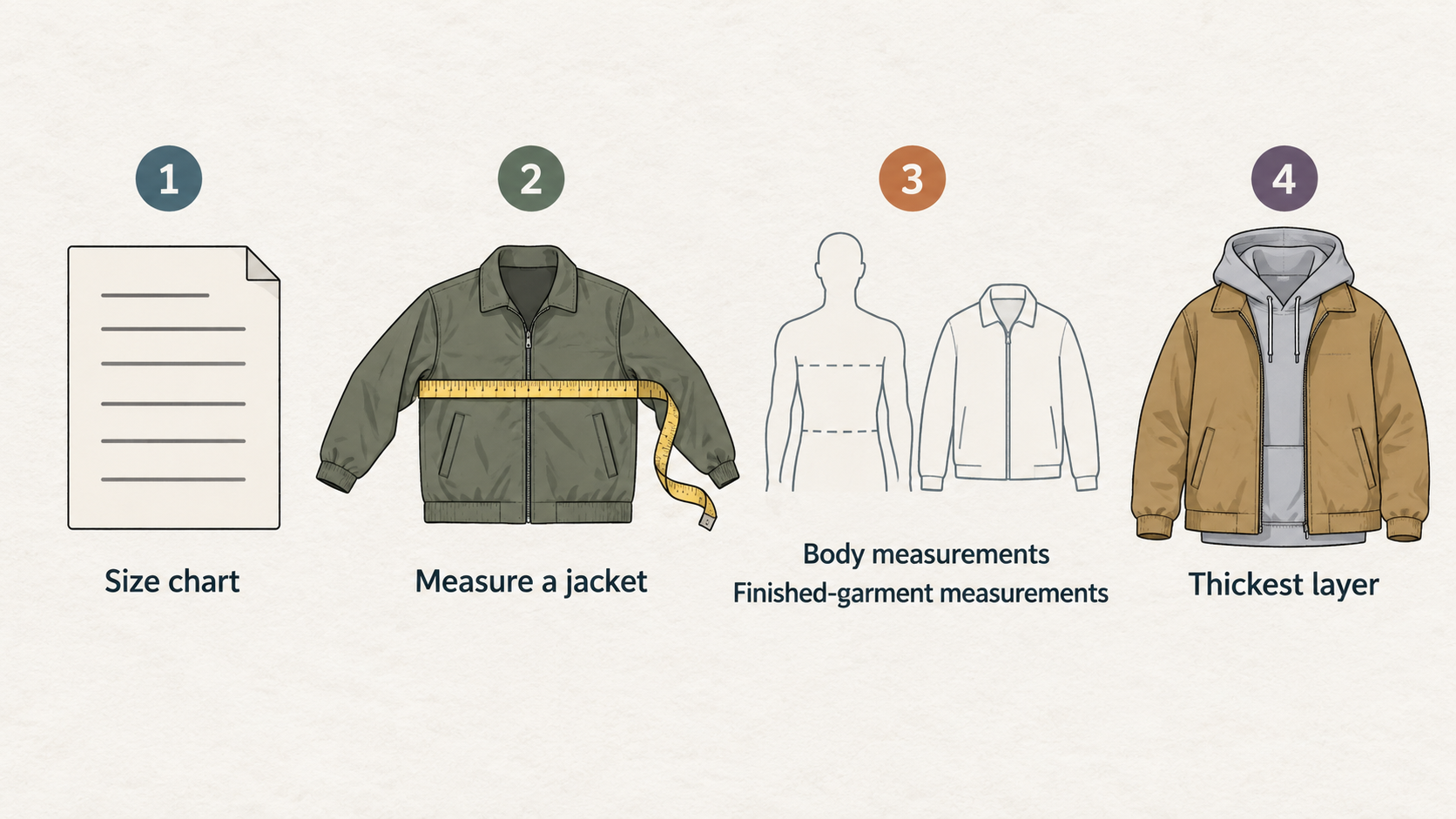
Treat the size chart as a starting point, not a verdict. Measure a jacket you already wear comfortably in the same way the retailer describes its garment measurements, and compare the numbers rather than relying only on S, M or L. Check whether the listing gives body measurements, finished-garment measurements, or both; they answer different questions.
Next, decide on the thickest layer you expect to wear underneath. If a hoodie is realistic for your routine, assess the jacket with that use in mind rather than judging it over a thin top. Focus on practical pressure points: shoulder reach, arm bend, chest room when zipped, back length when sitting, and whether the hem rides up when you lift your arms.
Use product photos carefully. They can help you understand silhouette and length, but model height, styling and camera angle are not your measurements. If a garment is intentionally cropped, boxy, oversized or close-fitting, decide whether that is compatible with your own layering plan before treating it as a sizing problem.
When the order arrives, try it indoors with the intended layers while tags and packaging are intact. Move normally: reach for a shelf, sit down, put on a backpack if that is part of your day, and zip or adjust the jacket. Read the retailer’s current returns conditions before removing labels or wearing it outside; those terms, rather than a general rule, determine eligibility.
Prioritise Materials and Features That Earn Their Place
Choose jacket details by the task they solve. A hood is useful if you will use it in changeable weather; adjustment at cuffs, hem or hood can matter when you want to alter the fit around layers. Pockets should fit the items you actually carry, and their placement should remain comfortable with a bag or while seated.
Read material descriptions literally. Look for the stated fibre content, lining, insulation, coating or membrane, construction notes and care instructions. These details help you compare garments, but they do not automatically tell you how the item will feel in every temperature or how it will perform in every storm. If a page makes a weather-related claim, consider the stated conditions and your intended use rather than assuming it replaces all other layers.
Ventilation, two-way zips and lighter constructions can be worthwhile for people who move between indoor and outdoor spaces. More hardware, heavier fabrics and additional protection may also add bulk, care requirements or a different drape. The better choice is the one whose compromises you will notice least often in your own routine.
Recognise the Trade-Offs Before Paying More
A higher price can reflect materials, construction, brand positioning, limited availability or added features, but it does not decide whether the item is the right everyday option. Separate the appeal of the design from the job the garment needs to do.
A sharply shaped jacket may leave less room for thick layers. A very oversized one may make a light outfit feel less tidy. Extra pockets and adjusters can add convenience, but also weight, visual complexity and more parts to care for. A delicate fabric or specialist finish may suit a particular look while asking for more careful washing and storage.
Do not treat a feature as a universal upgrade. Instead, ask what you give up to gain it: freedom of movement, simplicity, packability, easy care, cost or the ability to use the same item across several outfits. If the trade-off is acceptable before checkout, you are less likely to keep an item that only works in an imagined version of your day.
Size Trail Shoes for Terrain, Movement, and Everyday Comfort
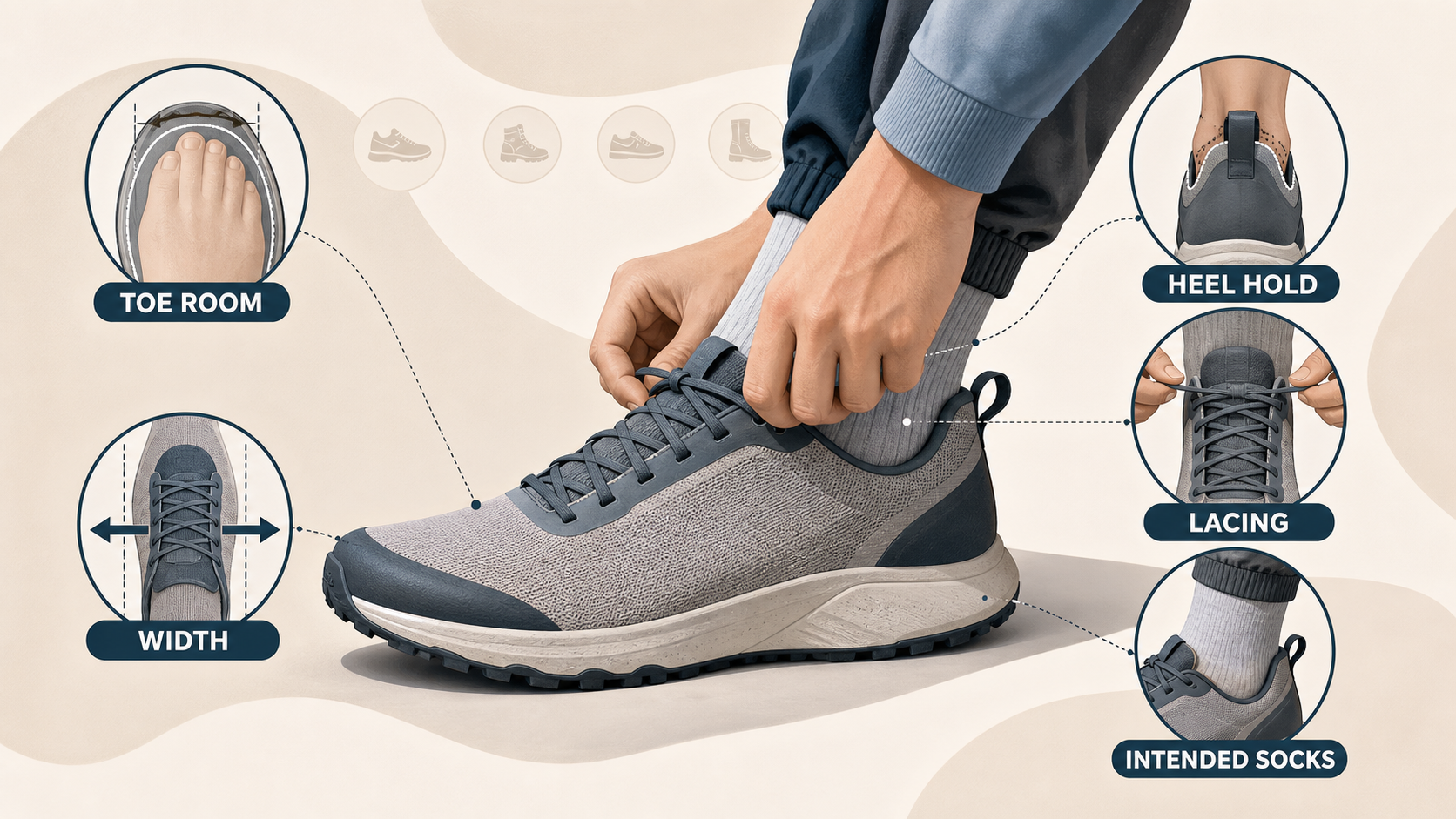
AI-generated generic editorial illustration — not a retailer product photo and does not depict the reviewed product or service. Reinforce the sizing checks readers can complete before ordering trail-inspired shoes.
 Start with the activity rather than the category name. Salomon’s running-shoe guidance recommends considering personal biomechanics, the type of running, where you run, how far, how fast, and your preferred feel for the terrain. For daily walking, translate that into the surfaces you cover, the time you spend on your feet, the socks you normally wear and the level of underfoot feel you prefer.
Use the official size guide for the specific product category and compare its stated measurements and conversions with a measurement of your feet. The sizing guide is intended to support online fit decisions by providing measurements and conversions; it is more useful than assuming that the same marked size will feel identical across brands or shoe shapes.
Try a new pair indoors with the socks you plan to use. Check for enough toe room when standing and walking, a heel that feels secure rather than loose, and width that does not create obvious pressure. Lace the shoe as you would for actual use, then walk, turn and use stairs if available. Notice whether the fit remains comfortable as your foot moves, not only when you are standing still.
If you expect long descents, uneven ground or frequent running, be especially deliberate about indoor movement checks and the retailer’s returns rules. A label such as “trail” is a starting point for comparison, not a substitute for judging the fit on your own feet.
Match the Shoe Category to Your Real Surfaces
Road-oriented, trail-oriented and casual trail-inspired shoes can all be appealing, but they should be compared by the surface and movement you expect. The official guide distinguishes road and trail running as part of choosing a shoe designed for how you run, while also identifying drop, cushioning, flexibility, size, weight, waterproofing, breathability and lacing as relevant features to consider.
For predominantly paved routes, begin with the feel and cushioning you want for that regular surface. For uneven, loose or wet ground, consider whether the product’s stated traction, protection and upper construction match those conditions. For everyday wear, styling, comfort over ordinary walking and compatibility with your wardrobe may matter more than chasing every technical feature.
Do not rank drop, cushioning, flexibility, weight, breathability or waterproofing as universally better or worse. A lower or higher drop changes the heel-to-forefoot height difference; more cushioning, a more flexible construction or a more weather-focused upper each changes the comparison. Decide which qualities matter for your routes and preferences, then check the product specification rather than inferring them from its appearance.
A versatile purchase is one that suits the largest share of your real use without creating a fit or care compromise you will regret. If you need separate footwear for city walking and demanding off-road running, it is reasonable to let those be separate decisions.
Protect Your Return Options and Extend Useful Life
Keep the first assessment controlled. Before outdoor wear, inspect the order, retain the original packaging and labels where required, and read the retailer’s current return and exchange terms. Terms vary by seller and product, so do not assume that a rule from another purchase applies here.
For a jacket, test the intended layers and routine movements indoors. For shoes, use clean indoor surfaces, the intended socks and normal lacing. Photograph any apparent issue promptly and keep your order information. These steps help you make a fit decision before you accidentally turn a return question into a condition question.
Once you keep the item, follow the product’s own care label and instructions. Avoid treating broad online advice as a replacement for the manufacturer’s guidance, especially for coatings, waterproof treatments, leather, insulation or mixed materials. Regularly empty pockets, allow footwear to dry as instructed, and store items in a way that does not unnecessarily crush or stress them. Care will not remove ordinary wear, but it can make day-to-day ownership more deliberate.
Use a Simple Pre-Order Decision Checklist
Use this sequence before placing the order:
- Define the real use: layers, weather, distance, surfaces and outfits.
- Compare your measurements with the relevant size chart and identify what the chart is measuring.
- Read the listed materials, construction and features for the problem they solve in your routine.
- For shoes, compare the category and stated features with the terrain and movement you expect; do not choose from styling alone.
- Check the retailer’s current delivery, return and exchange conditions before checkout.
- Plan an indoor first try-on with your usual layers or socks before outdoor use.
This order puts use case before aesthetics and fit before assumption. It will not eliminate every preference decision, but it gives you a clear reason to proceed, pause or choose a different option.
Frequently Asked Questions
Should I size up for a jacket if I plan to wear a hoodie underneath?
Not automatically. Compare the jacket’s measurements with a jacket you already wear comfortably over a hoodie, then consider the intended silhouette. An oversized cut may already include room, while a closer-fitting cut may not. Confirm indoors with the actual hoodie before wearing the jacket outside and check the retailer’s terms first.
How should trail shoes fit if I will use them mainly for daily walking?
Use the official size guide as the starting point, then try the shoes indoors with your normal socks. Look for comfortable toe room, a secure heel and no obvious width pressure while walking and turning. For everyday use, prioritise the surfaces and time on foot you actually expect rather than choosing solely for a trail-inspired look.
Can I rely on my usual shoe size when ordering a new brand online?
Your usual size is a useful reference, but not a guarantee. Compare your foot measurement with the brand’s official chart and conversions, then preserve return eligibility while you confirm the fit indoors. Shoe shape, intended socks and lacing can all affect how a marked size feels.
What should I check indoors before deciding whether to keep my order?
For a jacket, test the layers and movements you use most: reaching, sitting, zipping and carrying what is normal for your day. For shoes, wear the intended socks, lace them normally and walk on clean indoor surfaces. Keep packaging and labels as required, and check the retailer’s current returns conditions before changing the item’s condition.
Sources
Related reading
- Best technical streetwear staples for UK everyday wear: jackets, layers, and trail shoes
- The North Face review: strengths, limits, and alternatives for UK everyday outerwear
- Salomon review: trail shoe fit, care, and everyday crossover trade-offs
- How streetwear and technical apparel should fit, feel, and hold up over time
Editorial information: About our editorial team · Read our editorial policy · Read our affiliate disclosure.