Quick comparison checks
| Decision check | The North Face | Patagonia |
|---|---|---|
| Fit | Verify the current model's size guide and fit notes. | Verify the current model's size guide and fit notes. |
| Materials | Check the exact garment fabric and construction. | Check the exact garment fabric and construction. |
| Care | Read the current care instructions before ordering. | Read the current care instructions before ordering. |
The Short Verdict
For everyday UK outerwear, choose The North Face if you want to shop across a broader outdoor gear ecosystem as well as jackets. Choose Patagonia if its material-impact focus is a more important part of how you assess ownership. Neither point settles whether a particular jacket will suit your commute, layering habits or style.
The useful comparison happens at model level. Check the garment’s stated fabric, insulation or shell construction, features, fit guidance and care information before ordering. That is where comfort, weather protection and day-to-day usefulness can differ.
Next step: explore our outerwear buying guide before narrowing your shortlist.
How The Brands Compare At A Glance
These brands can look similar from a distance: both are prominent outdoor-clothing names and their ranges overlap in broad apparel terms. For an everyday UK wardrobe, however, the question is not simply which logo works best with streetwear. It is whether a specific layer works for a commute, weekend walking, lighter outdoor use and the way you prefer to dress.
A fair comparison starts with five checks: the category you need, the intended weather and activity, the garment’s material and construction, how it fits over your usual layers, and the practical ownership details supplied for that exact item. Those details should be verified on the current product and policy pages rather than assumed from a brand’s reputation.
At brand level, an independent comparison describes Patagonia as concentrating on apparel, packs and some gear, while The North Face has a wider gear offering. It also cautions that the more meaningful differences emerge in product-level functionality, material quality, features, comfort and style. Treat that as a framework for research, not a verdict on every jacket either brand sells.
Fit Materials And Everyday Function
AI-generated generic editorial illustration — not a retailer product photo and does not depict the reviewed product or service. Help readers apply the article's supported comparison criteria without implying an unsupported product-by-product ranking.
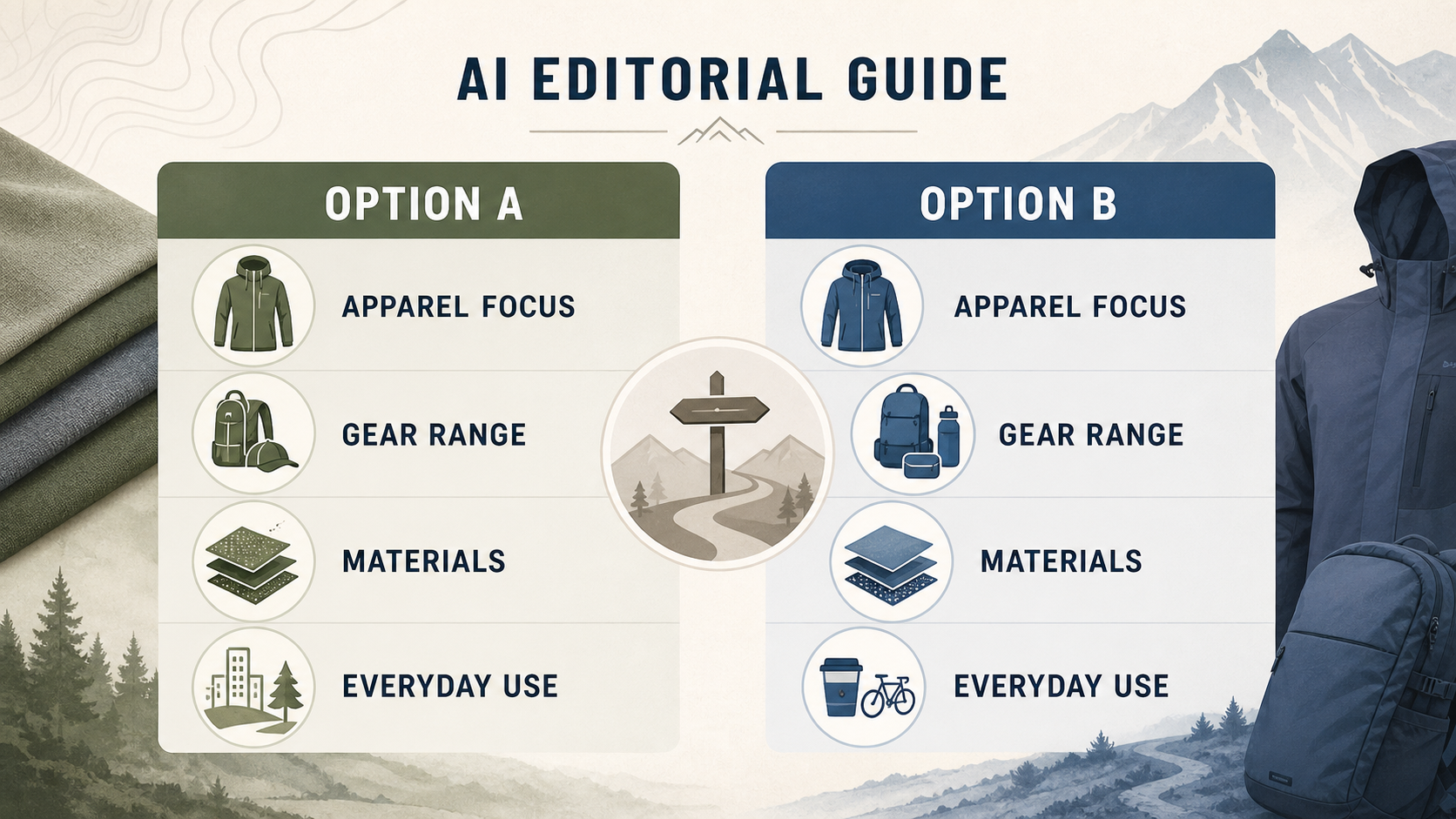 Fit is the first practical filter. A jacket that looks right on a product page may not leave enough room for knitwear, a mid-layer or a backpack strap. Conversely, a roomier outdoor cut may feel excessive if most of its use will be trains, offices and short walks. Compare each model’s own size guide, fit description and garment measurements where available; do not assume the same sizing approach applies across a whole brand.
Materials need the same model-by-model treatment. “Waterproof”, “insulated” and “recycled” can describe very different constructions, weights and intended uses. Read the current fabric composition, lining, insulation, membrane or coating description, plus the care label guidance, before deciding whether a piece suits regular rain, occasional cold spells or dry everyday layering. A material story is useful context, but it does not replace checking the specifications of the garment in your basket.
For everyday function, think about the details that affect repeated use: hood adjustment, pockets, fastening style, hem and cuff design, packability, warmth and how the piece works with the shoes and trousers you already wear. The independent evidence does not support a blanket winner on these points; it says that functionality, material quality, features, comfort and style become clearer in the individual products.
A simple decision rule follows. If you want to compare outerwear while also shopping for tents, sleeping bags, footwear or accessories, The North Face’s documented broader gear range may simplify the shortlist. If you are weighing a jacket partly through the brand’s stated material-impact orientation, Patagonia may deserve closer attention. Then return to the exact product pages and compare like with like.
For more context, see our jacket fabric and insulation explainer and our guide to layering for wet UK weather.
Why Choose Patagonia
Patagonia may be the more compelling choice when material considerations are central to your purchase decision. The supplied independent comparison identifies a dedicated Patagonia focus on reducing social and environmental impact through the materials used in its products. That gives a buyer a relevant brand-level lens when comparing otherwise similar outerwear.
It should not become a shortcut to claims about a particular item’s durability, warmth or lifetime usefulness. Look at the garment-specific material list, construction, care directions and any current repair information before buying. Those checks matter especially when you expect a jacket to move between weekday wear, travel and lighter outdoor use.
Patagonia also makes sense for readers who would rather start with apparel, packs and a more selective gear offering than treat one label as the source for every outdoor category.
Patagonia Limitations To Consider
Patagonia’s documented apparel-, packs- and some-gear focus may be a limitation if you want to build one cross-category shopping list that also includes tents, sleeping bags, shoes and other accessories. In that situation, a broader gear catalogue can make comparison and coordination easier.
There is also an evidence boundary worth keeping visible. The supplied material does not establish current UK sizing practice, garment-care terms, repair availability, returns conditions or long-term value for any specific Patagonia item. The official range page supplied here was not available for browsing at the time it was captured, so it cannot fill those gaps.
Before ordering, check the live UK product page and the current relevant policy page. If the information you need is unclear, pause rather than treating a brand-level sustainability position as proof of a particular ownership outcome.
Why Choose The North Face
The North Face is the more natural starting point when outerwear is only one part of your shopping list. The independent evidence describes a wider gear selection beyond apparel, including tents, sleeping bags, shoes and accessories. That breadth can be useful for someone combining everyday outerwear with trail-inspired footwear or planning more technical trips.
It does not mean every item will be the better fit. Comfort, style, material quality, features and functionality remain model-specific questions. Compare the exact jacket against the Patagonia alternative you are considering, including its intended use, fabric information, warmth or weather-protection details, and care instructions.
For footwear context, see our trail-inspired footwear guide.
Alternatives Worth Considering
If neither brand matches the way you dress, your budget or the conditions you face, broaden the search by use case rather than chasing a universal “best” option. A lightweight layer for city showers, a warmer commuting parka, a simple fleece for indoor-outdoor layering and a more technical shell solve different problems.
Start by deciding what must not be compromised: weather protection, warmth, weight, room for layers, ease of care or a more understated everyday look. Then compare equivalent garments across your shortlist using their current product information. A lower-priced option may be appropriate if its stated construction and intended use match your needs; a higher-priced option still needs to justify itself through the details relevant to you.
Our waterproof jacket alternatives roundup can help structure that wider search.
Frequently Asked Questions
Which brand is better for everyday UK wear?
There is no supported blanket winner. The North Face may be the better starting point if a wider gear ecosystem matters alongside outerwear. Patagonia may suit readers who place more weight on its documented material-impact focus. For everyday use, compare the actual jacket’s fit, fabric, construction, features and care information before deciding.
It can help to begin with the situations the jacket must handle, rather than the logo. A commute, dog walk, weekend city break and occasional trail use can place different demands on warmth, pocket layout, weather protection and how easily the piece layers over knitwear. Make a short list of non-negotiables, then compare those points on like-for-like models. This keeps the decision centred on the garment you will actually wear.
Should I size up in The North Face or Patagonia jackets?
Do not size up automatically for either brand. Check the current size guide and fit notes for the specific model, then consider what you will wear underneath it. If possible, compare garment measurements or try the item on. The supplied evidence does not establish a brand-wide UK sizing rule.
Also consider the intended use of the layer. A close-fitting shell that works over a T-shirt may feel restrictive over a fleece, while a roomy insulated jacket may not need extra allowance for everyday wear. Check the product’s stated fit description, measure a jacket you already like, and keep your likely layering system consistent when comparing options. Treat reviews as personal reference points, not a substitute for the current model information.
How should I check care and repair options before buying?
Read the care information attached to the exact garment and look for current repair guidance on the relevant official UK pages. Confirm what is offered, any conditions that apply and whether the information covers your item. Material composition alone does not tell you how a jacket should be washed, maintained or repaired.
Save the product page or care label details when you buy, especially for a technical layer you expect to keep for several seasons. Before washing, check the label again and follow its instructions rather than applying a routine from a different fabric or garment type. If damage occurs, contact the relevant brand with the model and a clear description before attempting a repair. That gives you the best chance of receiving guidance that matches the item.
Are returns and long-term value the same across both brands?
Do not assume so. Current returns terms, product condition requirements, care expectations and the value you get from repeated wear can vary by item and policy. Check the live UK policy and product pages before purchase, then judge value against how often and where you expect to use that specific piece.
For a fair comparison, include delivery timing, the cost of returning an unsuitable fit, and whether you can test the garment indoors without affecting its return condition. Long-term value is also personal: a jacket worn several times each week may justify more careful comparison than one reserved for rare trips. Record the model, size and colour before checkout so you can verify that the product page, care details and policy you reviewed all refer to the same item.
Sources
Related reading
- Best technical streetwear staples for UK everyday wear: jackets, layers, and trail shoes
- The North Face review: strengths, limits, and alternatives for UK everyday outerwear
- Patagonia review: fit, materials, repair support, and who it suits
- How streetwear and technical apparel should fit, feel, and hold up over time
Editorial information: About our editorial team · Read our editorial policy · Read our affiliate disclosure.