
AI-generated illustration — not a retailer product photo.
Technical details can be useful, but they are not a shortcut to a good everyday purchase. The most useful choice is usually the one that fits your normal routes, weather, movement and care routine—not the one with the loudest launch story.
What this guide helps you judge
AI-generated illustration — not a retailer product photo.
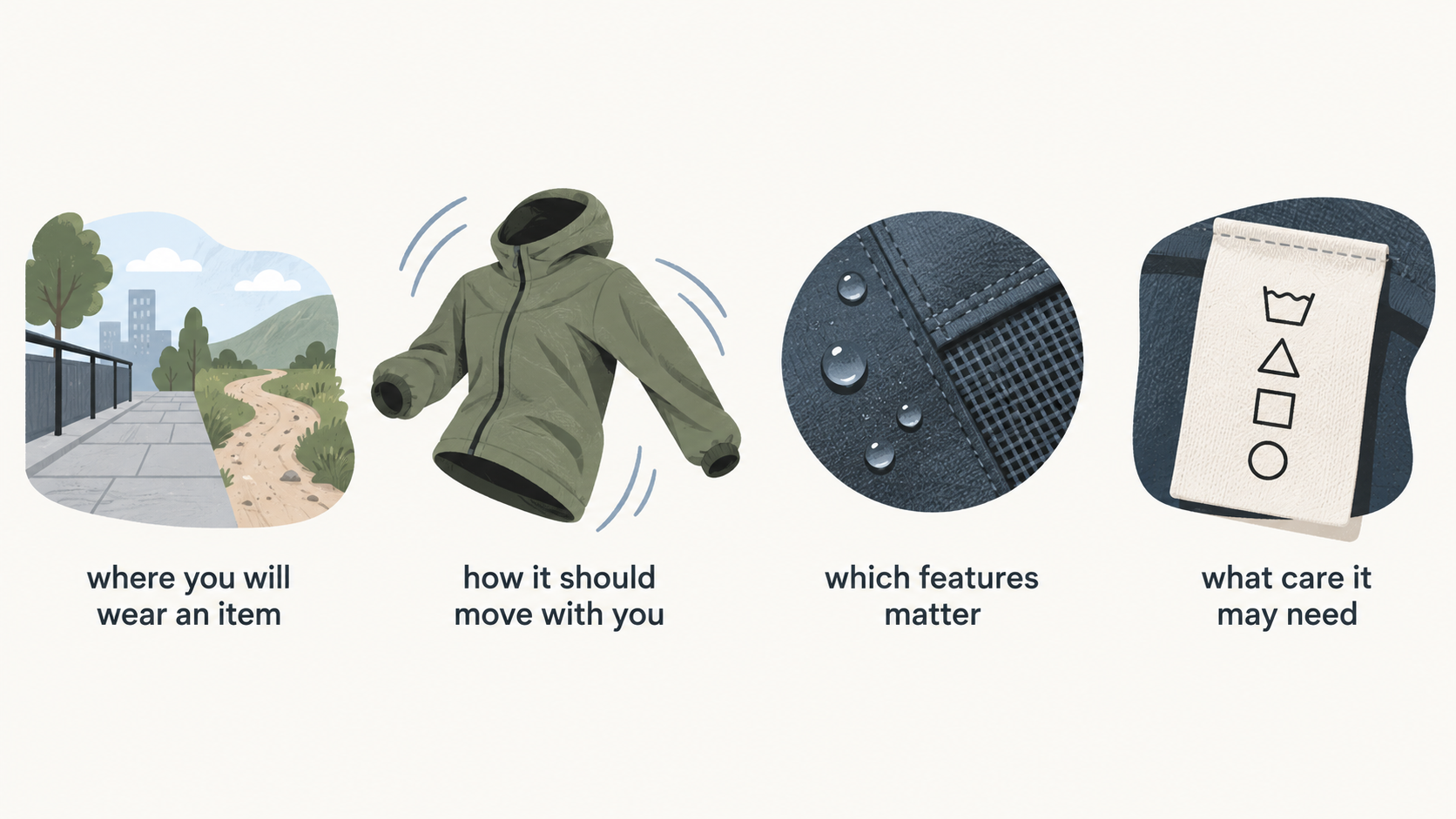
This guide gives you a practical way to compare trail-inspired shoes, streetwear and technical layers for everyday use. It focuses on the questions published product guidance can help you ask: where you will wear an item, how it should move with you, which features matter, and what care it may need.
The supplied official guidance is strongest on running footwear and shoe care. It can help you interpret categories such as cushioning, flexibility, weight, breathability, waterproofing, size and drying. Use the same decision habit when comparing apparel, but check each garment’s own label and product page for its fabric mix and care instructions.
It cannot tell you exactly how a particular item will feel on your body after months of use. Comfort, silhouette and long-term wear depend on the product, your proportions, the conditions you use it in and how you maintain it. Think of published guidance as a starting point for better questions, rather than a verdict.
Start with where and how you will wear it
AI-generated illustration — not a retailer product photo.
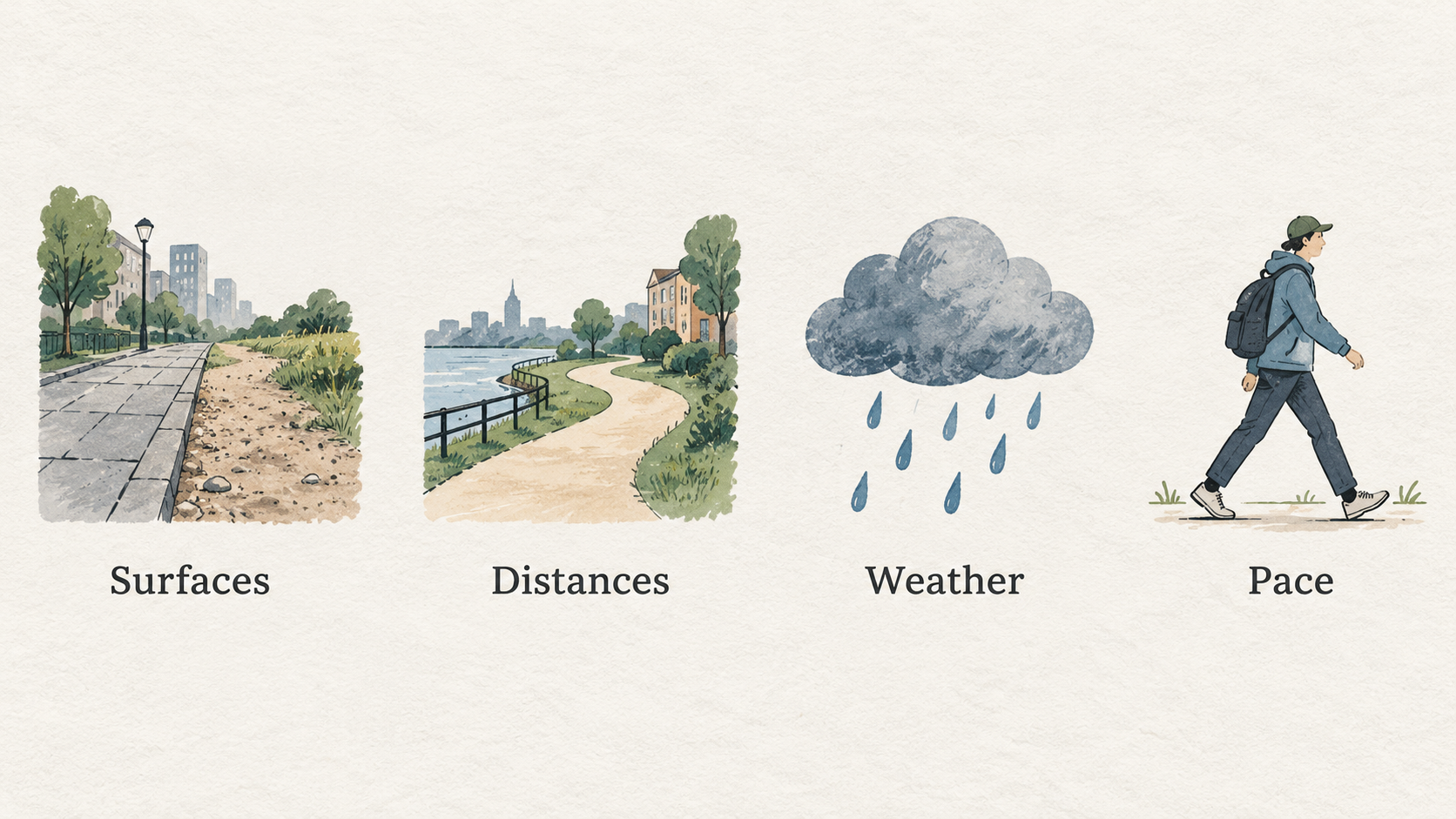
Start with the ordinary version of your week. Are you walking to work in rain, spending long days on your feet, travelling, or moving between city pavements and softer paths? A technical-looking piece can be a good fit for everyday wear, but its useful features should match those conditions.
For footwear, Salomon’s running-shoe guidance recommends beginning with the way you run: where, how far and how fast, alongside your preferences for how the ground feels. For an everyday buyer, the comparable question is simpler: what surfaces, distances, weather and pace will the shoe actually see? A trail-inspired sole may make sense for regular uneven ground; it may be unnecessary if most use is short urban walking.
For outerwear, work from the movement and weather you expect. Leave room for the layer you will genuinely wear underneath, and do not treat a protective-looking fabric as a reason to ignore ventilation, weight or ease of movement. A relaxed streetwear silhouette can be intentional; it should still let you sit, reach and carry your usual things comfortably.
Before comparing colours or limited releases, write down the use case in one sentence. It gives you a clearer basis for comparing features and prevents a specialist product from being judged only as an outfit.
Judge fit by movement, layering and foot shape
AI-generated illustration — not a retailer product photo.
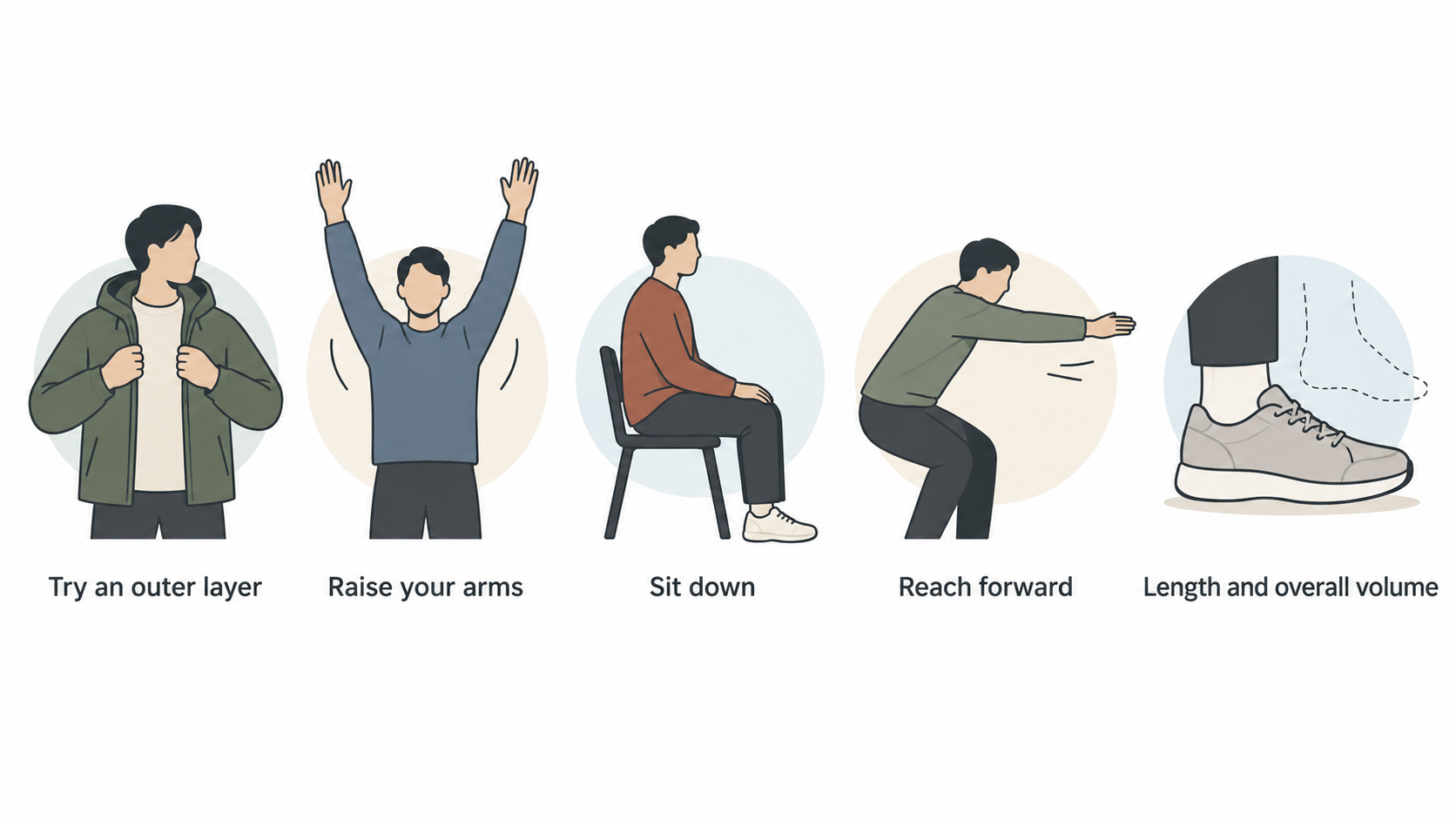
Fit is more useful when it is tested in motion rather than judged only in a mirror. Try an outer layer over the knit, shirt or base layer you expect to wear most often. Raise your arms, sit down and reach forward. If the garment pulls sharply across the shoulders, rides up excessively or makes your normal movement awkward, extra visual drama is unlikely to make it more practical.
For footwear, begin with the manufacturer’s size guidance and assess both length and overall volume. The official running guidance treats size as one of several core choice factors, alongside terrain, cushioning, flexibility and weight. That is a useful reminder that the right nominal size is not the whole answer: toe room, heel hold and the shape of your foot still matter.
A deliberately roomy trouser, boxy jacket or padded shoe can be a style choice. The distinction to watch is whether the room supports your intended layers and movement, or whether it produces slipping, pressure or friction. Wear the socks you would normally use with the shoes, and use the same kind of layer you would use under the jacket.
If a shoe causes persistent pain or repeated injuries while running, Salomon advises consulting a sports-medicine specialist rather than making unsupported changes yourself. For everyday discomfort that is not a medical issue, pause before wearing the item outside and check the retailer’s exchange terms.
Read materials and construction as trade-offs
Product details are most useful when read as trade-offs. Cushioning can change the underfoot feel; flexibility, weight, breathability and waterproofing can all shape how a shoe feels in different conditions. Salomon lists these as features to consider when selecting running shoes, rather than presenting one combination as right for everyone.
For everyday footwear, ask which compromise you are willing to make. A more weather-protective option may be attractive for wet commutes, while a more breathable option may suit warmer or more active days. The product page should tell you what the maker claims; your job is to compare that claim with your normal conditions.
The same approach helps with clothing. Check the listed fabric, lining, closures and care instructions, then consider how the piece will work with the layers and bags you already use. A fabric description does not, by itself, prove that a jacket will stay comfortable in every temperature or that it will suit every activity.
Pay attention to high-wear areas too. Salomon notes that some shoes use reinforcement in high-abrasion areas and that those areas may change in appearance over the product’s life without affecting stated performance or properties. Cosmetic change and functional failure are not necessarily the same thing, but product-specific construction still matters.
Care routines that protect materials over time
Care starts with removing what the item picked up during use. Salomon recommends using a soft, wet brush and clean water to remove dirt and mud from shoes after use. It also says shoes should not be cleaned in a washing machine and should be dried at room temperature, away from external heat sources, including the sun.
For leather and leather-lined products, the guidance recommends a cream or water-based wax treatment to help limit cracking, stiffening and reduced waterproofness associated with natural ageing. It cautions that treatment may alter the original appearance even if it does not affect the stated performance or properties.
Textile and fabric areas should be cleaned regularly using the same general care approach. Clean linings periodically to help limit odour build-up; wearing socks is also recommended to help keep shoe linings durable and odour-free. Salomon says removable sock liners may be machine washed in warm water and replaced when necessary—this does not mean the whole shoe can go in the machine.
Treat the product label as the final authority. Different materials, adhesives, coatings and removable parts may need different care, even when two items look similar.
What published guidance cannot prove
Official guidance can describe intended use, feature categories and a care routine. It cannot establish that every shopper will find an item comfortable, that a particular material will keep its appearance for a fixed period, or that a product will suit every commute, climate or body shape.
It also cannot settle retailer-specific questions such as your return window, whether outdoor wear affects eligibility, or how an individual retailer interprets a worn item. Check the retailer’s current terms before taking an item outside or removing tags if you may need to return it.
Likewise, do not convert a feature into a guarantee. Waterproofing, breathability, cushioning, reinforcement and a particular fit description are details to evaluate against the product page and your intended use. They are not proof of lifetime durability or a promise of the same feel for every wearer.
A practical checklist before you buy
Use this sequence before committing:
- Name the real use. List the surfaces, weather, walking or running distance, and the layers you expect to wear.
- Check fit in motion. Test footwear with your usual socks; test outerwear over the layers you normally use.
- Compare the meaningful features. For shoes, review size, cushioning, flexibility, weight, breathability, waterproofing and lacing where relevant.
- Read the care instructions now. Confirm whether you can realistically brush, clean, dry and maintain the materials as directed.
- Inspect the retailer terms. Read the current return and exchange conditions before outdoor wear or other use that could change eligibility.
Lasting value is not guaranteed by a technical label or a familiar silhouette. It is more likely when the item suits your actual routine and when its maintenance needs are realistic for you. If two products seem close, choose the one whose fit, intended use, care requirements and return terms you understand most clearly.
Frequently Asked Questions
How should technical footwear fit for everyday wear?
Start with the maker’s size guidance, then assess the shoe with the socks and activity you will normally use. Check length, overall volume, heel hold and whether you can walk naturally without pressure or slipping. Published running guidance treats size as one factor among terrain, cushioning, flexibility and weight, so avoid treating a size label alone as proof of fit.
Can you wash technical shoes or removable sock liners in a washing machine?
Salomon states that shoes should never be cleaned in a washing machine. It recommends removing dirt and mud with a soft, wet brush and clean water. Its guidance separately says removable sock liners should be machine washed regularly using warm water and replaced when necessary. Always check the instructions for the specific product before cleaning.
How should leather, textile and reinforced shoe materials be dried and maintained?
Dry shoes at room temperature without external heat or sun. Salomon recommends regular cleaning for textile and fabric areas, and a cream or water-based wax treatment for leather and leather-lined products; treatment may change leather’s original appearance. Reinforced high-abrasion areas can change in appearance over time without necessarily changing stated performance or properties.
When should you check a retailer’s returns policy before wearing an item outdoors?
Check it before outdoor wear, removing tags or any use that might affect the retailer’s interpretation of return eligibility. Official product guidance does not determine retailer-specific return windows or worn-item conditions, so consult the current terms for the seller you are buying from.
Sources
Related reading
- The North Face vs Patagonia: outerwear fit, materials, care, and value
- The North Face review: strengths, limits, and alternatives for UK everyday outerwear
- Salomon review: trail shoe fit, care, and everyday crossover trade-offs
- How to choose streetwear jackets and trail shoes for fit, layering, and daily use
Editorial information: About our editorial team · Read our editorial policy · Read our affiliate disclosure.