AI-generated illustration — not a retailer product photo.
Patagonia is often considered by people who want outerwear that can work across daily commutes, weekend walks and more technical use. The useful question is not whether every item will suit every routine, but whether the fit, fabric information and ownership support match the way you will actually wear it. This guide focuses on how to assess that decision without assuming a hands-on test of a particular jacket or layer.
Patagonia at a Glance
AI-generated illustration — not a retailer product photo.
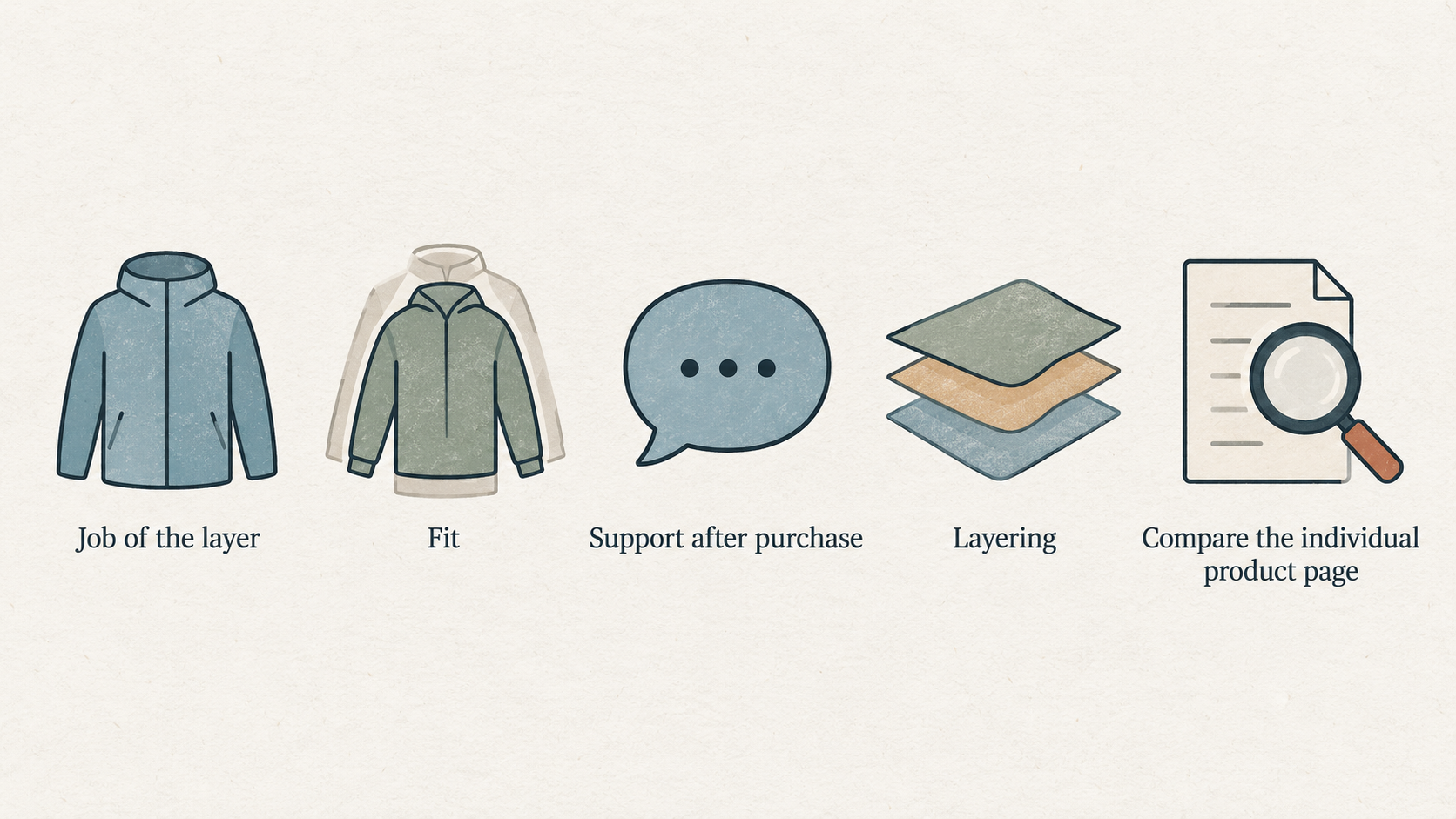
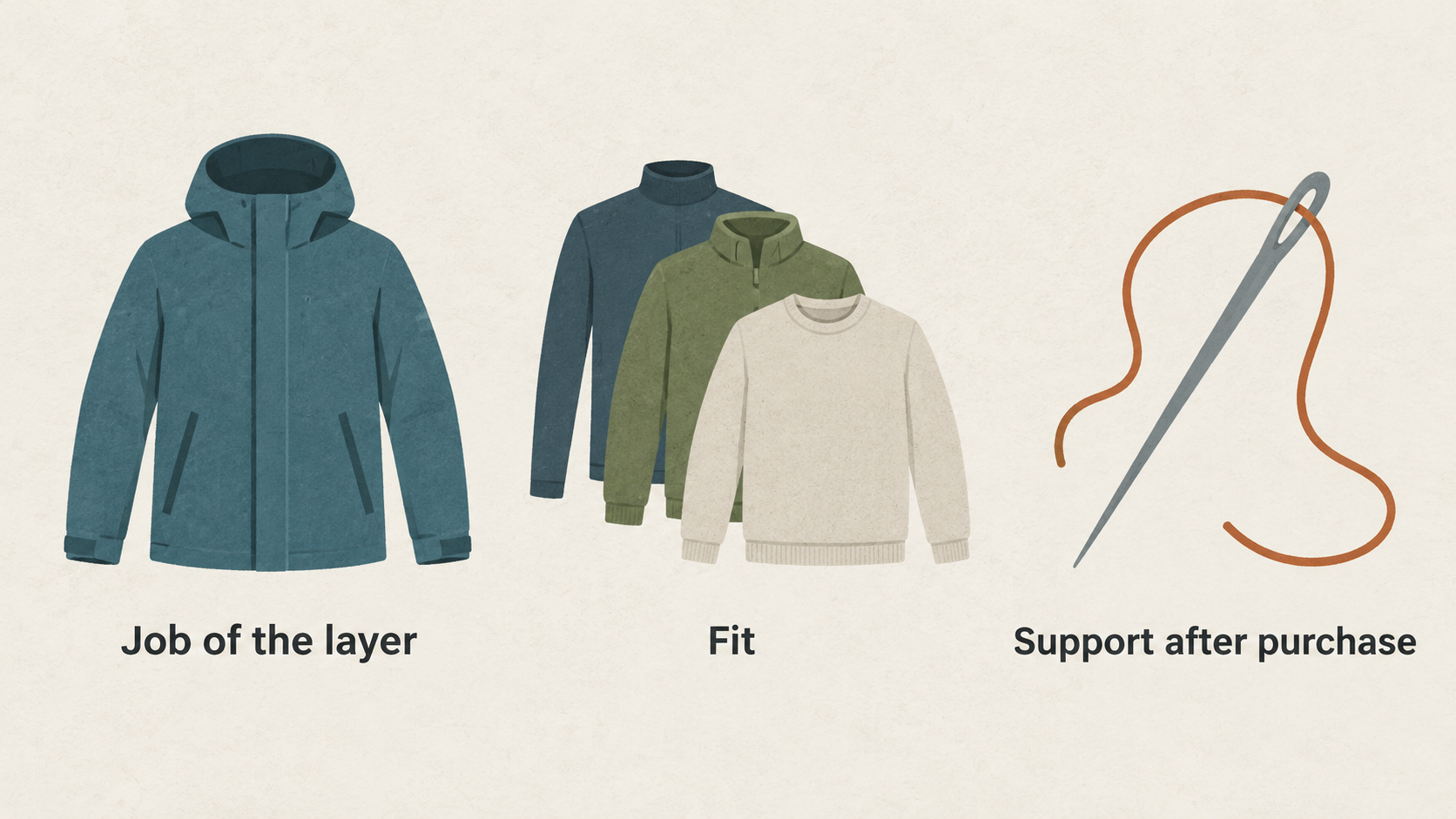
For an everyday outerwear purchase, start by separating three decisions that are easy to blur together: the job of the layer, the fit needed over the clothes you already own, and the support available after purchase. A lightweight shell, insulated jacket and fleece mid-layer solve different problems, so a brand name alone is not a shortlist.
For UK readers, weather variability makes layering especially relevant. Consider whether you need a piece mainly for wind and rain, warmth while stationary, or a flexible layer that can move between indoor spaces and cooler conditions. Then compare the individual product page rather than relying on a range-wide assumption about warmth, waterproofing or durability.
Patagonia’s published Worn Wear material makes repair, trade-in and used gear part of the ownership conversation. That can be relevant if you prefer to keep a garment in use for longer, but it does not remove the need to check the specification, local availability and purchase terms for the exact item you intend to buy.
Fit, Sizing and Everyday Layering
AI-generated illustration — not a retailer product photo.
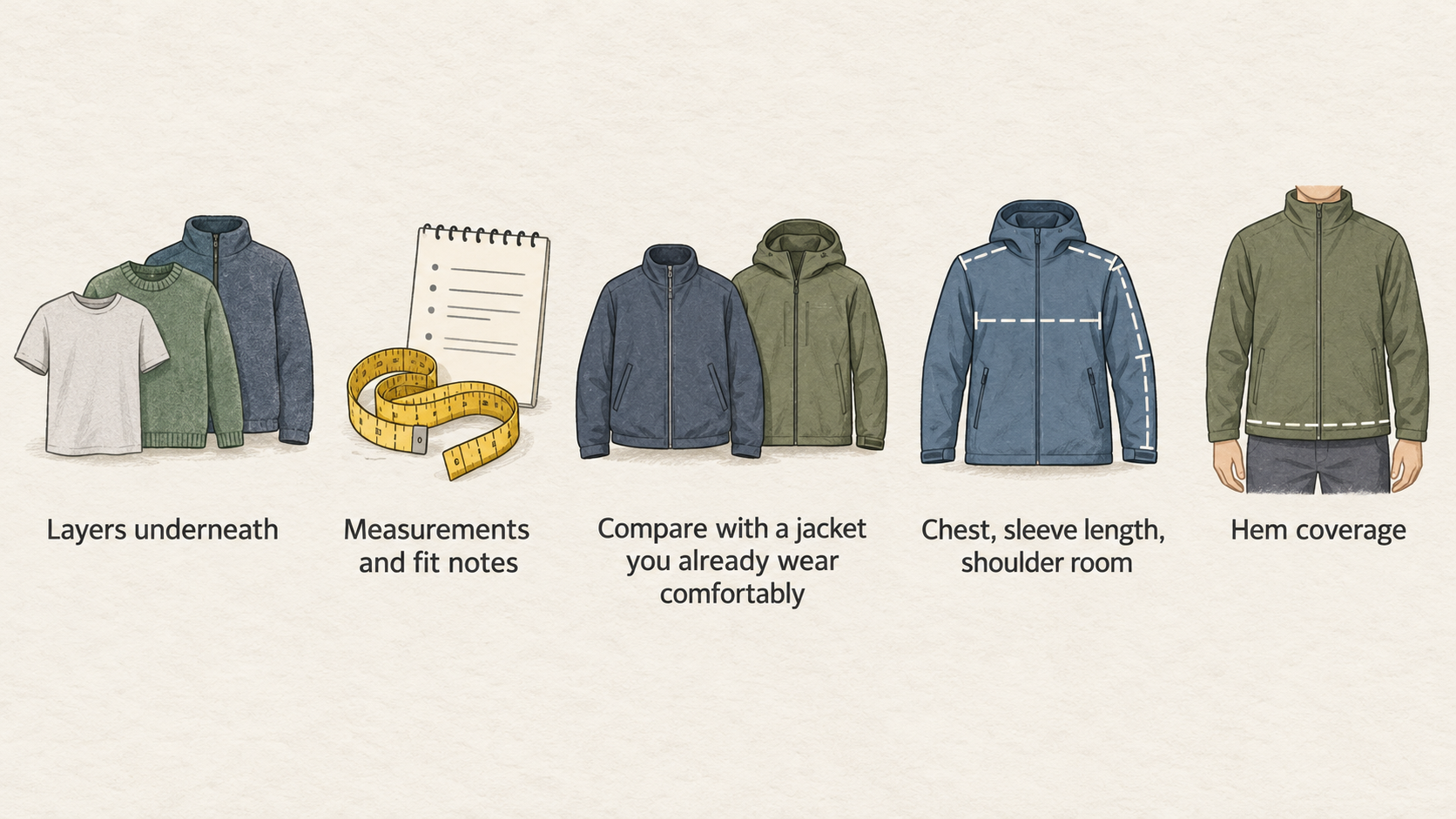
Fit is best treated as a layering question rather than a single size label. Before choosing a size, decide what will normally sit underneath: a T-shirt, a knit, a fleece or an insulated mid-layer. A jacket that feels suitably neat over a light top may be restrictive over the layers you use on colder days.
Use the measurements and fit notes on the relevant Patagonia UK product page, then compare them with a jacket you already wear comfortably. Pay attention to chest, sleeve length, shoulder room and hem coverage. For outerwear, arm movement matters as much as standing posture: lifting a bag, cycling or reaching for a train rail can reveal whether you need more room through the upper body.
If you sit between sizes, the intended use should lead the decision. Prioritise layering room for a shell or an everyday winter layer; prioritise a closer silhouette only if you are confident it will still accommodate your normal base and mid-layers. Check the current size guide and returns route before ordering, especially when comparing men’s, women’s or unisex styles.
Avoid treating another shopper’s fit report as a substitute for the item’s current measurements. Product cuts, available sizes and intended use can vary by model, so the most reliable comparison is between the live product information and your own well-fitting garment.
Materials, Construction and Lasting Value
AI-generated illustration — not a retailer product photo.
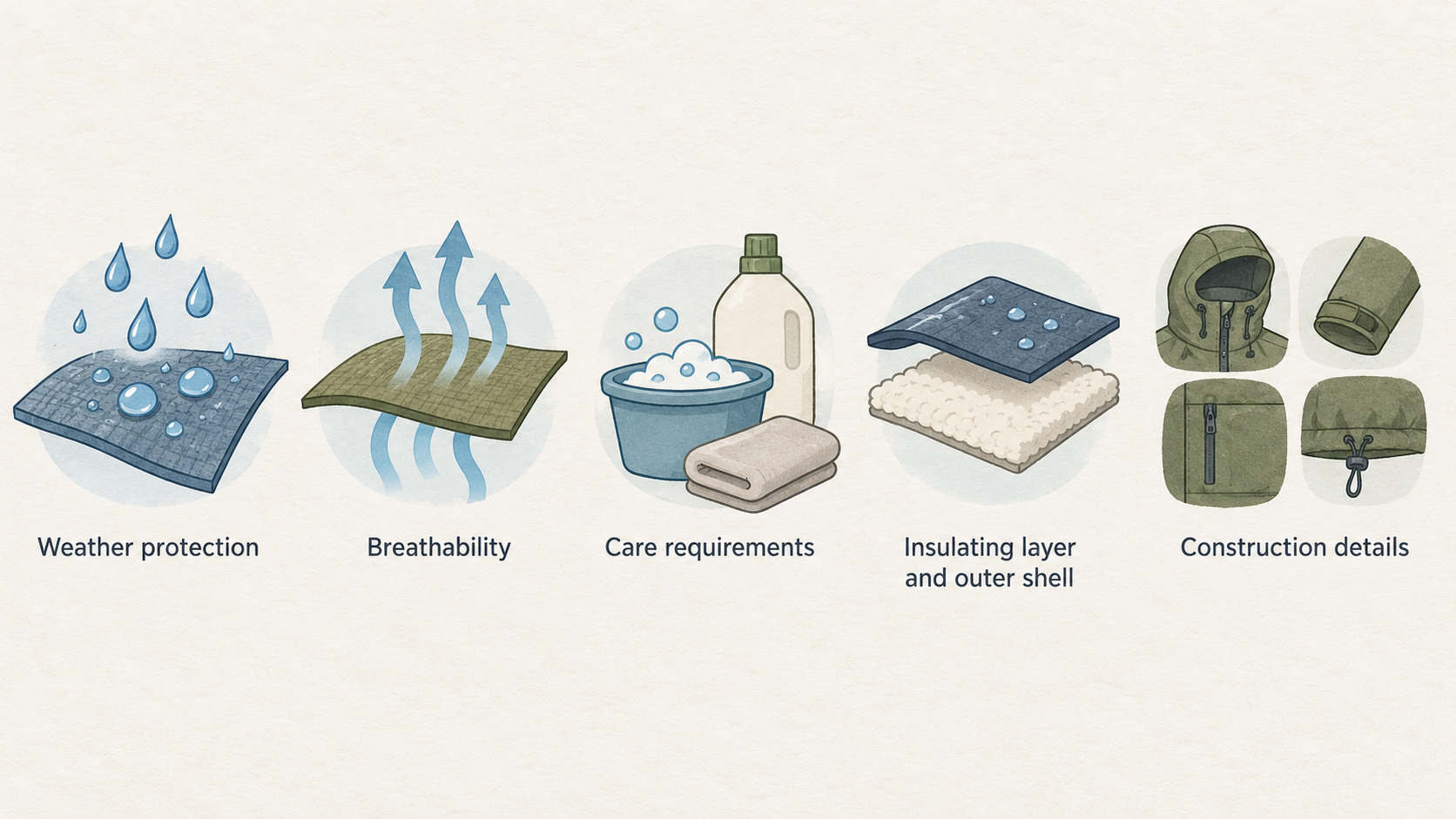
Material descriptions become more useful when translated into the conditions you expect. For a rain-facing outer layer, look for the stated weather protection, breathability and care requirements. For warmth, distinguish between an insulating layer and an outer shell: adding more fabric does not automatically mean the piece will handle the conditions you have in mind.
Construction details also affect day-to-day use. A hood, cuff adjustment, pocket layout and hem shape can matter on a wet commute; a smoother face fabric may matter more if the jacket will be worn with a backpack or over knitwear. Read these details as trade-offs, not as a checklist of universally better features.
Lasting value is similarly product-specific. Check the product page for the fibre content, care instructions and any details that affect repairability or expected maintenance. A garment that matches your wash routine, layering needs and likely wear pattern is usually a stronger long-term choice than one selected for a broad reputation alone.
If circular ownership support is important to you, factor in whether you are willing to repair, resell or buy used. Patagonia’s published repair guidance describes keeping gear in use through care, DIY repair and professional repair help, but that support should not be read as a guarantee that every fault, garment or outcome will be handled in the same way.
Repair, Resale and Product Support
Patagonia’s Worn Wear repairs page describes two routes for damaged gear: DIY care and repair guides, and help from repair technicians. It says the DIY material includes more than 100 care and repair guides created with iFixit. For a reader comfortable with basic maintenance, that makes it worth checking whether the specific issue is covered before replacing an item.
For damage that is beyond a home repair, the same page says repair technicians can try to fix damaged gear when it is mailed in or brought to a store. It also says that an item beyond repair may be recycled to keep it out of landfill. Those are published pathways, not a promise that a particular garment will be accepted, repaired or recycled, so confirm the current process before sending anything.
Worn Wear also states that eligible Patagonia gear can be traded in for credit and that shoppers can buy functional used Patagonia gear. This can make a used option worth considering when cosmetic wear is acceptable and the exact model is available. The Worn Wear FAQ says items sold there are backed by its Ironclad Guarantee; check the live terms that apply to the marketplace and order you are considering.
Explore Patagonia Worn Wear repair guidance
Returns, Delivery and Buying Limitations
UK buyers should verify delivery, returns, cancellation and warranty information through Patagonia UK before placing an order. These details can depend on the sales channel, product, location and current policy, and they may matter as much as a size decision if you are ordering several sizes or comparing a new item with a used one.
The supplied Worn Wear FAQ is useful for understanding its own model, but its contact details, delivery timings and order information should not be assumed to describe Patagonia UK purchases. Worn Wear states that orders generally leave its warehouse within three to four business days and then spend about five to seven business days in transit; that is marketplace-specific information, not a UK delivery promise.
Before checkout, confirm the current UK price, stock, dispatch estimate, return window, return condition requirements and the support route for the exact retailer or Patagonia channel you use. If a repair or guarantee is part of the value calculation, read the live policy rather than assuming that a general support statement answers a product-specific case.
Who Patagonia Suits—and Who Should Compare Alternatives
Patagonia is likely to suit readers who prefer to assess outerwear as a longer-term ownership choice, rather than only by initial appearance. The published Worn Wear repair, care, trade-in and used-gear information may be particularly relevant if you are prepared to maintain a garment or consider a pre-owned option.
It may also suit shoppers who can clearly describe their intended use: an everyday shell over layers, a warm piece for low-output use, or a flexible mid-layer for mixed indoor and outdoor days. That clarity makes it easier to compare the specification and fit notes of individual pieces.
Compare alternatives if your priority is a very specific silhouette, a tightly defined sport use, a lower upfront price or a purchase policy that is especially important to you. Comparison is also sensible when you need a particular technical feature that is not clearly documented on the item page. In those cases, judge several current products against the same requirements instead of treating any brand as a shortcut to the right answer.
How to Choose the Right Patagonia Jacket or Layer
Use this simple decision path to build a shortlist:
- Start with the weather problem. Choose between rain and wind protection, added warmth, or a versatile layer for milder conditions. Do not expect one category to perform every role equally well.
- Choose the layering position. A shell usually needs room over other layers; a mid-layer needs to sit comfortably beneath an outer layer. Check the item’s fit information with your normal clothing combination in mind.
- Read the product details for the features you will use. Focus on the stated fabric, care requirements, pockets, hood and adjustment details rather than general impressions of the range.
- Set an ownership plan. If you expect heavy wear, consider whether you would use care guides, seek a repair or look at used gear. Worn Wear says it offers DIY repair guidance, repair help and eligible-gear trade-ins, subject to its current terms.
- Verify the purchase route. Confirm UK stock, price, delivery, returns and after-sales terms before committing.
This framework helps narrow the range without pretending that one jacket is best for everyone. The right option is the one whose stated purpose, fit and maintenance demands align with your routine.
Check current Worn Wear trade-in and used-gear information
Frequently Asked Questions
What repair options does Patagonia publish for damaged gear?
Patagonia’s Worn Wear repairs page publishes DIY care and repair guides, including guides developed with iFixit, and says repair technicians can try to fix damaged gear sent by mail or brought to a store. Check the current process and eligibility before relying on either route for a particular item.
What is Worn Wear and how does its trade-in and used-gear model work?
Worn Wear says it allows customers to trade in eligible Patagonia gear for credit and buy functional used Patagonia gear. Availability, eligibility and the applicable terms should be checked on the live Worn Wear site before making a decision.
Can Patagonia gear be repaired at home?
The published Worn Wear material includes DIY repair and care guides, so home repair may be an option for issues covered by those guides. Whether it is appropriate depends on the garment, damage and your own confidence with the repair.
What should UK buyers verify about returns and order support before purchasing?
Verify the current Patagonia UK channel’s delivery estimate, return terms, cancellation process, warranty or guarantee information and customer-support route. Do not use Worn Wear’s US-facing order timings or contact information as a substitute for current UK purchase terms.
Related reading
- Best technical streetwear staples for UK everyday wear: jackets, layers, and trail shoes
- The North Face vs Patagonia: outerwear fit, materials, care, and value
- The North Face review: strengths, limits, and alternatives for UK everyday outerwear
- How streetwear and technical apparel should fit, feel, and hold up over time
Editorial information: About our editorial team · Read our editorial policy · Read our affiliate disclosure.