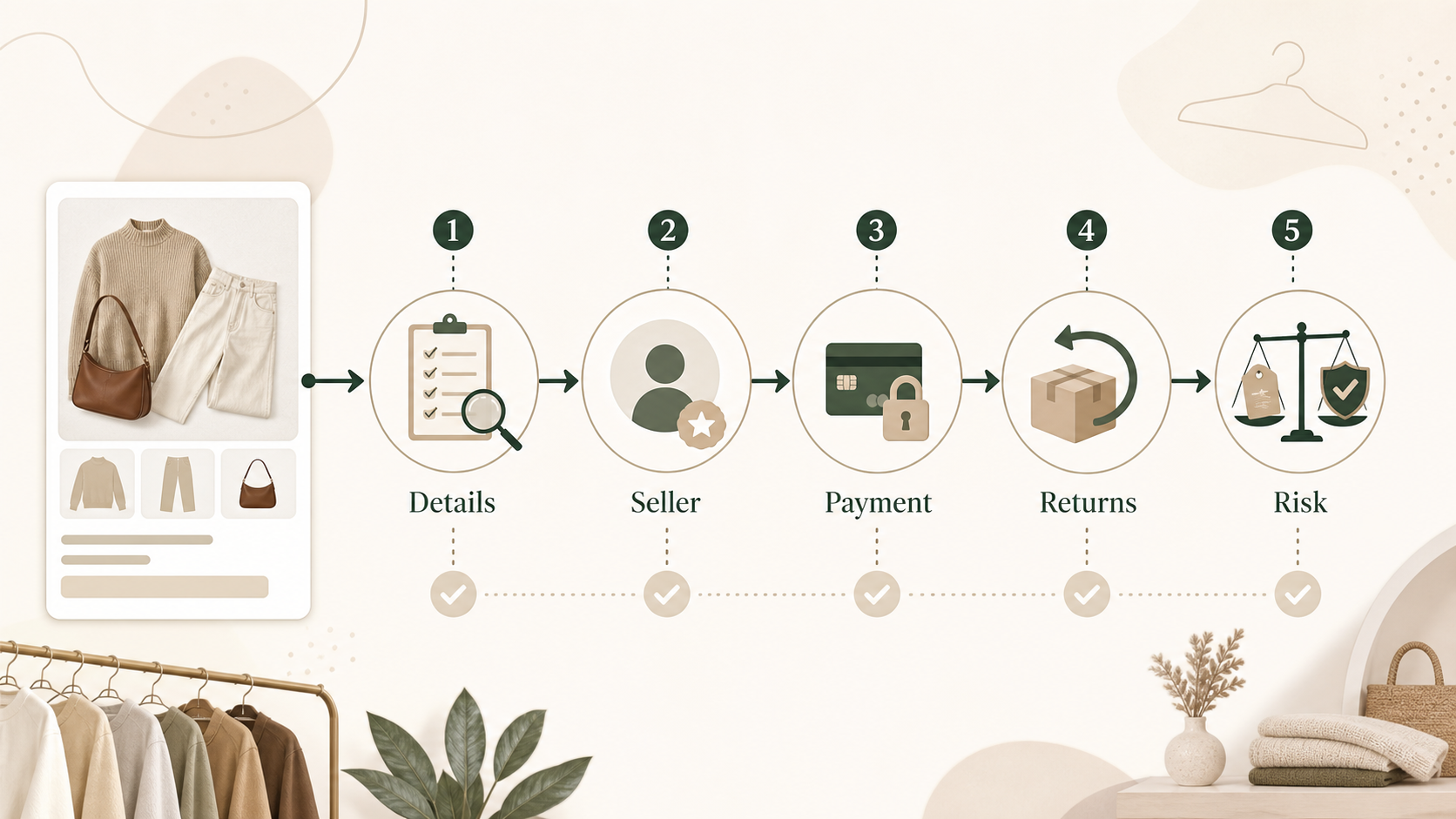
A low price is only a real saving when the item, the seller and your way out of the transaction all stand up to scrutiny. For UK buyers, that means treating authenticity, payment protection and return options as part of the price—not extras to consider after checkout.
Start With the Deal, Not the Discount
AI-generated illustration — not a retailer product photo.
Streetwear resale can be a sensible route to discontinued colours, lightly worn outerwear and better value on durable pieces. But a tempting percentage off retail does not establish that a listing is genuine, accurately described or recoverable if something goes wrong. Counterfeit goods can be presented in ways that mislead buyers online, and an attractive recommendation or polished listing is not a guarantee of authenticity.
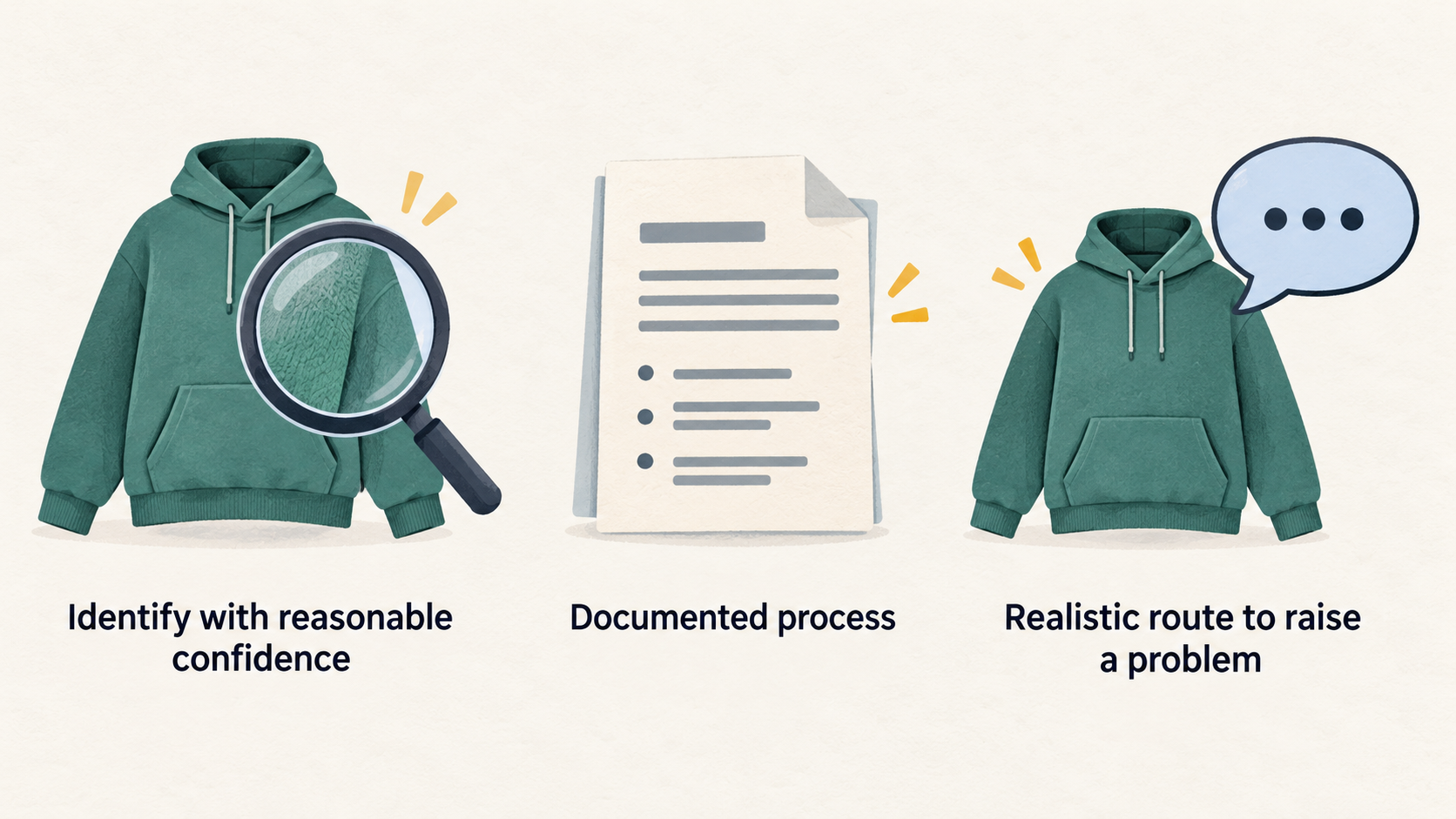
Start with a simple definition: a worthwhile deal is an item you can identify with reasonable confidence, bought through a documented process, with a realistic route to raise a problem if it arrives faulty, misrepresented or suspected to be fake. If any one of those parts is missing, the discount should have to work much harder to justify the risk.
Before comparing prices, decide what you need from the purchase. Is the piece for daily wear, a hard-to-replace technical layer, or a pair of shoes where fit and condition matter more than the label? This keeps the decision anchored to use and lasting value rather than scarcity language or fear of missing out. For a broader framework, see our streetwear value guide and online shopping safety checklist.
Read the Listing Like an Authentication Check
AI-generated generic editorial illustration — not a retailer product photo and does not depict the reviewed product or service. Make the first-pass authentication and risk signals easier to scan without presenting specialist authentication claims.
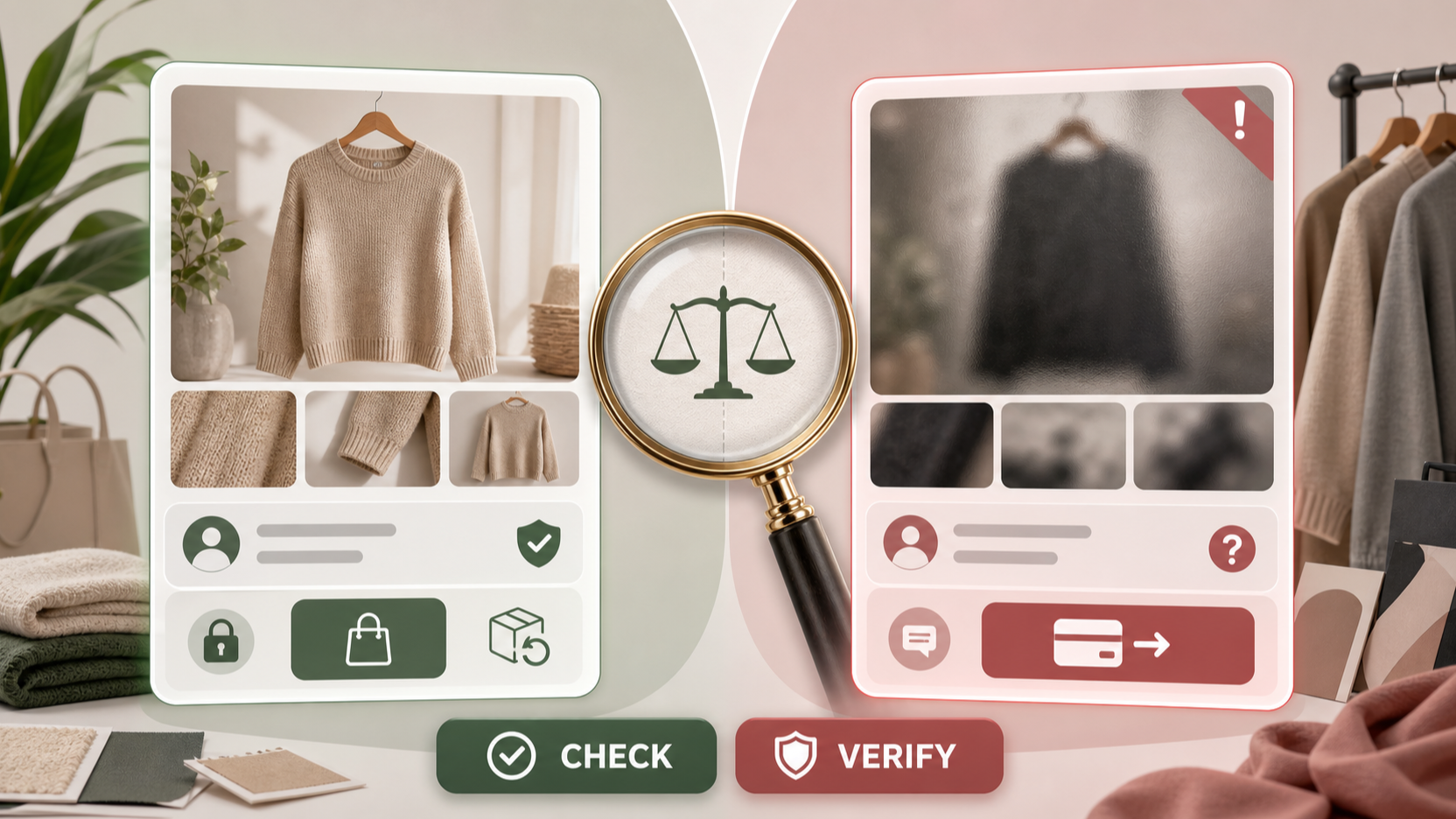 A listing is not an authentication certificate. It is, however, your first opportunity to look for consistency. Read it as a set of details that should agree with each other: the photographs, product name, size, colour, condition, materials, measurements, accessories and account of where the item came from.
Start with the images. Prefer clear, item-specific photographs over generic or heavily filtered pictures. Look for views that let you assess wear where it matters: soles and insoles for footwear; cuffs, seams, lining and zips for jackets; and prints, labels or care tags where relevant. If the seller uses stock images, ask for current photos of the actual item before deciding. A stock image is not proof of a problem, but it leaves important questions unanswered.
Then compare the description with the images. Does the stated condition match visible fading, pilling, repairs, stains or missing components? Are the size and fit notes specific enough for the garment? Does the claimed model, colourway or season make sense alongside the photos? A seller need not be an expert to provide an honest listing, but unexplained contradictions are a reason to pause.
Price is a signal to investigate, not a verdict. An unusually cheap item may have a perfectly ordinary explanation—heavy wear, incomplete accessories, an urgent clear-out or a sizing mistake. It may also warrant more questions. Do not try to settle authenticity from one clue such as price, packaging or a single label photograph. Counterfeiters continue to refine their imitation methods, so a cautious first pass is more useful than confidence based on one reassuring detail.
Avoid pressure to leave the marketplace to “secure” an item, reduce a fee or complete payment quickly. Keep questions in the platform message thread where possible, and ask concise, answerable questions: when was it bought, what condition issues should I know about, and can you add photographs of the relevant areas? If the responses remain vague, inconsistent or rushed, walking away is a valid outcome. For practical checks on wear, see how to check clothing size and condition and our materials and care guide.
Check the Seller and Keep the Transaction On-Platform
AI-generated illustration — not a retailer product photo.
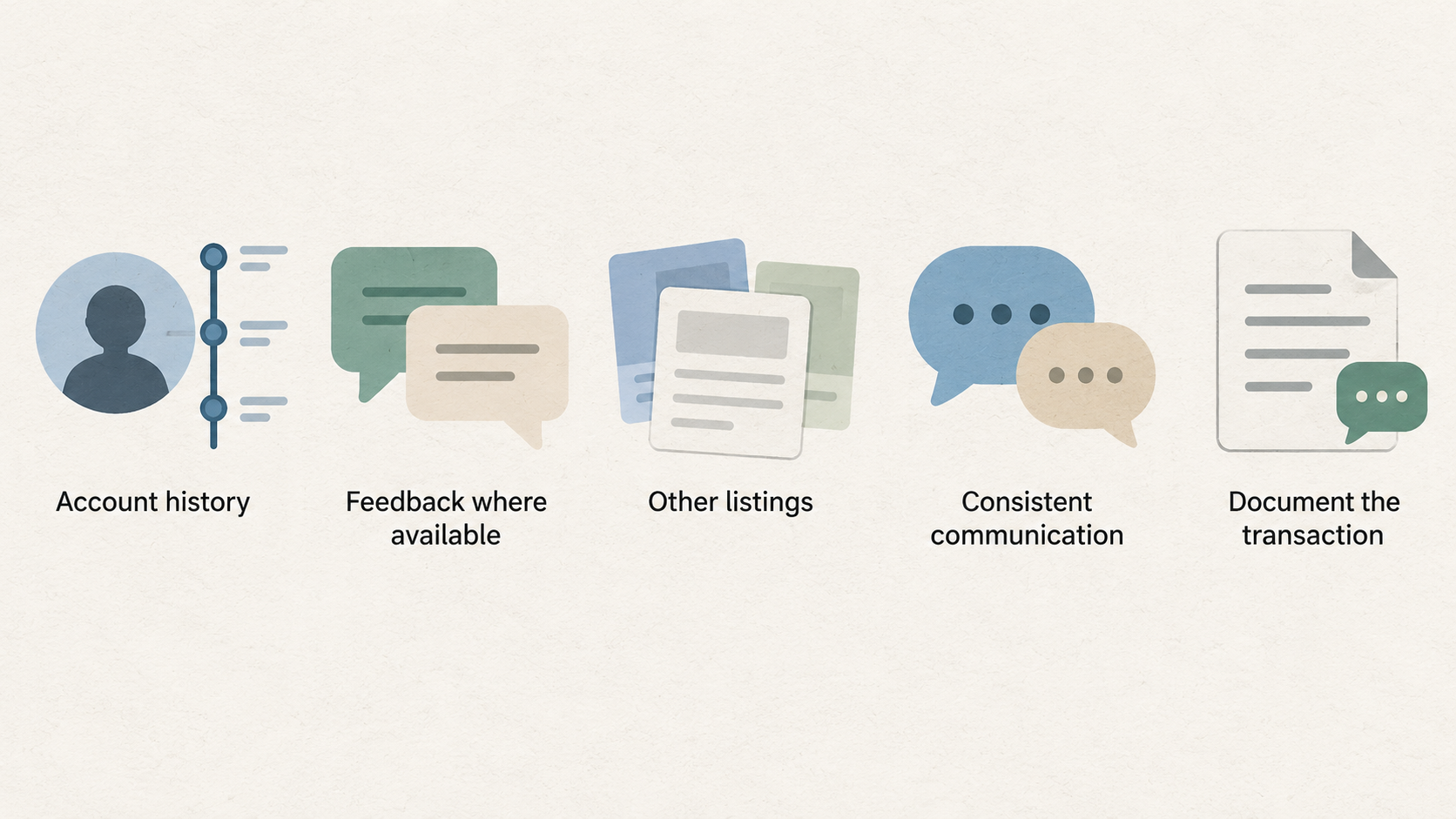
Seller information can help you judge transaction risk, but it cannot conclusively prove that an item is genuine. Treat it as supporting context. Review the account’s history, feedback where available, other listings and the consistency of the seller’s communication. A seller who answers specific questions, acknowledges condition issues and is willing to use the marketplace process gives you more usable information than one who relies on urgency or avoids detail.
Look for a transaction you can document. Keep the listing, the messages, the payment confirmation and delivery information together. If there is a later dispute, these records can show what was advertised, what you asked and how the seller responded. Screenshots are particularly useful if a listing may change or disappear.
Use the marketplace checkout and its stated protection process where it is available. Requests to pay by bank transfer, a separate payment link, cash, gift cards or another off-platform route can remove the records and protections you expected from the marketplace. Even if a seller offers a plausible explanation, the question is whether you would still have a clear evidence trail and a realistic dispute route if the item never arrived or was not as described.
Marketplaces are improving detection and prevention tools, but the methods used to deceive buyers also evolve. That is why a platform badge, a long account history or a confident sales message should not replace your own checks. Choose a seller and payment route that leave a clear record, then assess the item on arrival before treating the transaction as finished. Our resale marketplace buying guide and secure online payment guide cover the same habits in more detail.
Price the Risk Into the Saving
The asking price is only the starting figure. A lower-priced jacket with damaged waterproofing, a shoe with an exhausted sole, or a garment needing specialist cleaning may cost more to own than a better-described alternative. Add likely cleaning, repair, replacement-part and return costs before calling a listing a bargain.
Authenticity and safety risk belong in that calculation too. Official UK guidance warns that counterfeit goods may be faulty, made from poor-quality materials or fail to meet safety standards. Fashion counterfeits may also use inferior materials, poor stitching and potentially harmful chemicals. These risks do not mean that every imperfect listing is fake; they mean the cost of being wrong can be higher than the headline saving suggests.
A useful comparison is: total cost of a usable item = price + delivery + likely care or repair + the cost of a failed recovery route. The final part is not always easy to put into pounds, but it changes the decision. A modest discount may not compensate for an unclear seller, off-platform payment or no workable return information. Conversely, a used item with specific condition photographs, clear measurements and a documented checkout route can offer better value than a newer but poorly explained listing.
Be especially careful with claims that a deal is “too good to miss.” Scarcity is not evidence. A five-minute pause to inspect the listing and seller is cheaper than trying to resolve a problem after delivery. To compare longer-term value, use our cost-per-wear guide and clothing care and repair guide.
Confirm Return Rights and Payment Protection Before Checkout
Before you pay, establish the practical answer to four questions: who is the seller, what does the listing say about returns, which payment route are you using, and what evidence will you retain? The answers may vary depending on the marketplace, the seller and the transaction circumstances, so do not assume that a resale purchase has the same return route as a standard retail order.
Read the marketplace terms and the individual listing before checkout. Note any stated return window, condition requirements, reporting deadline and process for items that are not as described. If a policy is unclear, ask the seller through the platform and keep the reply. A promise made only in an external chat is harder to rely on later than a recorded answer within the transaction.
Choose a payment path that preserves a dispute route and keep your receipt or confirmation. Save the original listing, photos, all messages, dispatch and delivery updates, and photographs taken promptly when the item arrives. If you suspect a problem, report it through the relevant marketplace process without delay and follow its evidence requirements.
UK consumer-rights guidance states that help is available for problems including faulty goods, counterfeit goods and fraud. The right next step depends on the details of the purchase and where in the UK you are based; Citizens Advice, Advice Direct Scotland and Consumerline are listed by GOV.UK as consumer-protection advice routes. This guide is a buying process, not case-specific legal advice. For more background, read UK online shopping rights and how to return online purchases.
Use a Five-Minute Buy-or-Walk-Away Checklist
Use this short check immediately before checkout:
- Identify the item. Are the photos of the actual piece, and do the model, size, colour, condition and details broadly agree?
- Check what is missing. Have you seen the areas most likely to show wear, damage or inconsistency? If not, ask for them.
- Review the seller. Is the account history and communication sufficiently transparent for the value at stake?
- Keep payment on-platform. Are you using the marketplace checkout rather than an off-platform arrangement that weakens your record?
- Confirm the exit route. Do you understand the stated return or reporting process, and have you saved the listing and messages?
Walk away when inconsistencies remain unresolved, the seller pushes you to pay outside the platform, return information is absent or contradictory, or you cannot verify the details you need. You do not need to prove that a listing is fake to decide it is not a proportionate risk.
If you proceed, retain screenshots, messages, payment confirmation and delivery records until you have inspected the item. That small archive can make the difference between a vague complaint and a documented report. For a reusable version of this process, see the online shopping safety checklist and streetwear resale shopping guide.
Frequently Asked Questions
Can I tell whether streetwear is genuine from listing photos alone?
Usually, no. Listing photos can help you spot missing information, visible condition issues or contradictions, but they are not conclusive proof of authenticity. Ask for clear, current, item-specific images and compare the listing details for consistency. If important questions remain unanswered, do not let a low price force the decision.
What should I do if I suspect a resale item is counterfeit after it arrives?
Keep the item, listing, messages, payment confirmation and delivery records, then use the marketplace’s reporting or dispute process promptly. GOV.UK lists consumer-protection advice for issues including counterfeit goods and fraud; the appropriate advice route depends on your circumstances and location within the UK.
Do I always have return protection when buying second-hand streetwear online?
No. Return and complaint options depend on the marketplace, seller and transaction terms. Read the policy and listing before paying, use the platform checkout where available, and keep records of any stated return process. Do not assume that a private resale purchase works like a conventional retail return.
Why is paying outside a resale marketplace risky?
Off-platform payment can leave you with fewer platform records and may make it harder to use the protections you expected. Keeping payment and messages within the marketplace gives you a clearer record of the listing, the agreement and the transaction if a problem follows.
Make the safer choice before you buy.
Use the full resale buying guide to compare listings, preserve evidence and decide when the saving is worth the risk.
Sources
Related reading
- Best technical streetwear staples for UK everyday wear: jackets, layers, and trail shoes
- Carhartt WIP review: jacket fit, utility, care, and UK returns
- How to choose streetwear jackets and trail shoes for fit, layering, and daily use
- When streetwear sales and seasonal discounts offer genuine long-term value
Editorial information: About our editorial team · Read our editorial policy · Read our affiliate disclosure.