AI-generated illustration — not a retailer product photo.
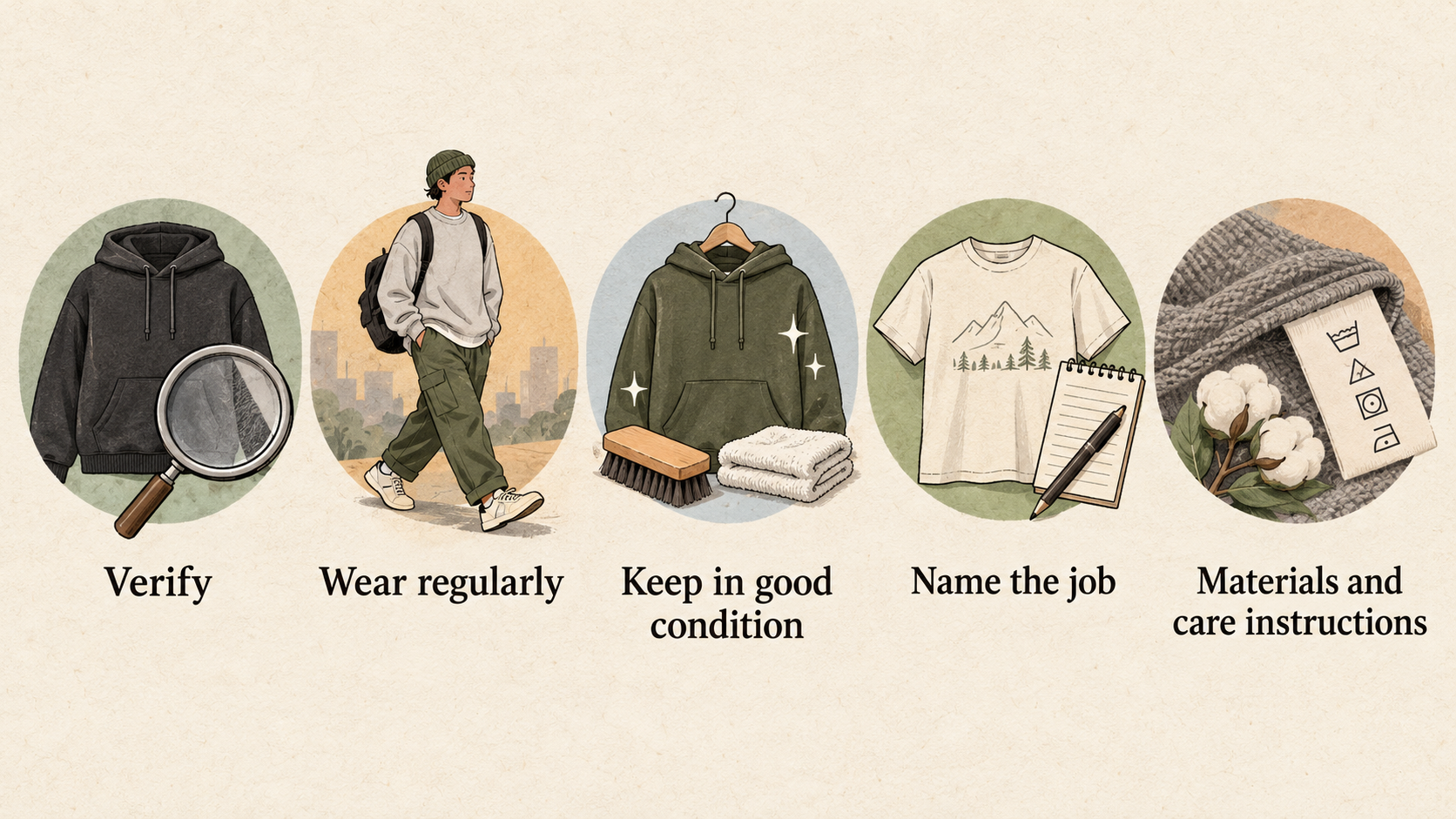
A seasonal reduction can make a useful wardrobe piece easier to afford, but the percentage on the label is only the start of the decision. Real value comes from buying an item you can verify, wear regularly and keep in good condition—not from securing the biggest apparent discount.
What Genuine Streetwear Sale Value Looks Like
AI-generated illustration — not a retailer product photo.
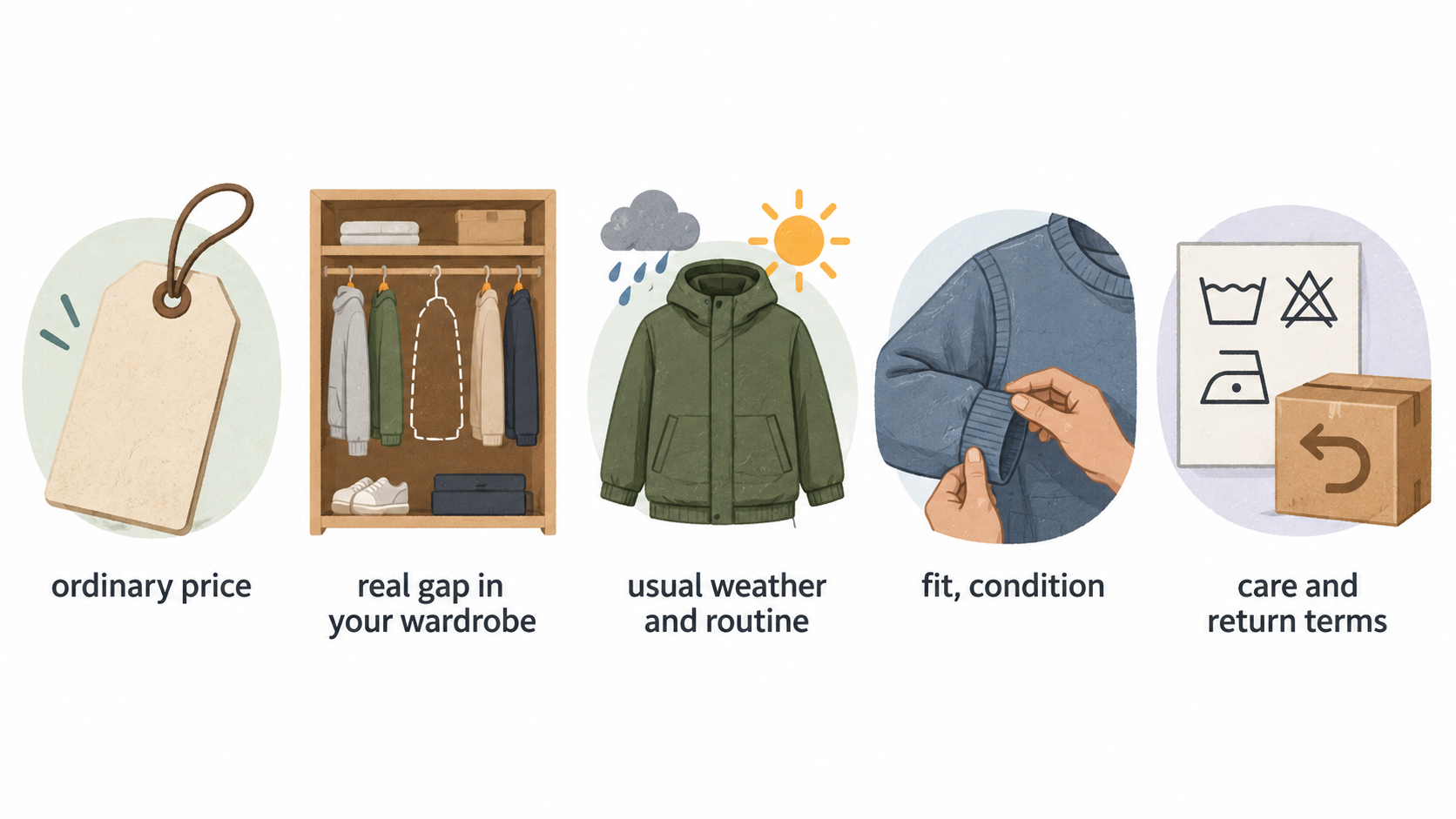
A good streetwear sale purchase is one that still makes sense after the excitement of the reduction has gone. Start with the item’s ordinary price, but do not stop there. Ask whether it suits a real gap in your wardrobe, whether you can wear it in your usual weather and routine, and whether the fit, condition, care and return terms are clear enough to buy with confidence.
This is especially useful for technical outerwear, heavier workwear and trail-inspired footwear. A jacket may be reduced because the colour is seasonal; that can be excellent value if it layers over what you already own and will be used often. The same reduction is poor value if the fabric requires care you will avoid, the sizing is uncertain, or the item cannot realistically be returned.
For online shopping in the UK, a “sale” label does not remove the core protections that apply when an item is faulty, misdescribed or unsuitable for its stated purpose. Online, mail and telephone customers also generally have a limited cancellation period for non-faulty goods, subject to the applicable rules and exceptions. GOV.UK: accepting returns and giving refunds
The practical test is simple: would you still choose this piece at this price if the crossed-out percentage were hidden? If the answer depends on the headline discount alone, pause. If it depends on useful wear, credible quality and manageable risk, the saving may be genuine.
Start With Intended Use and Cost Per Wear
AI-generated illustration — not a retailer product photo.
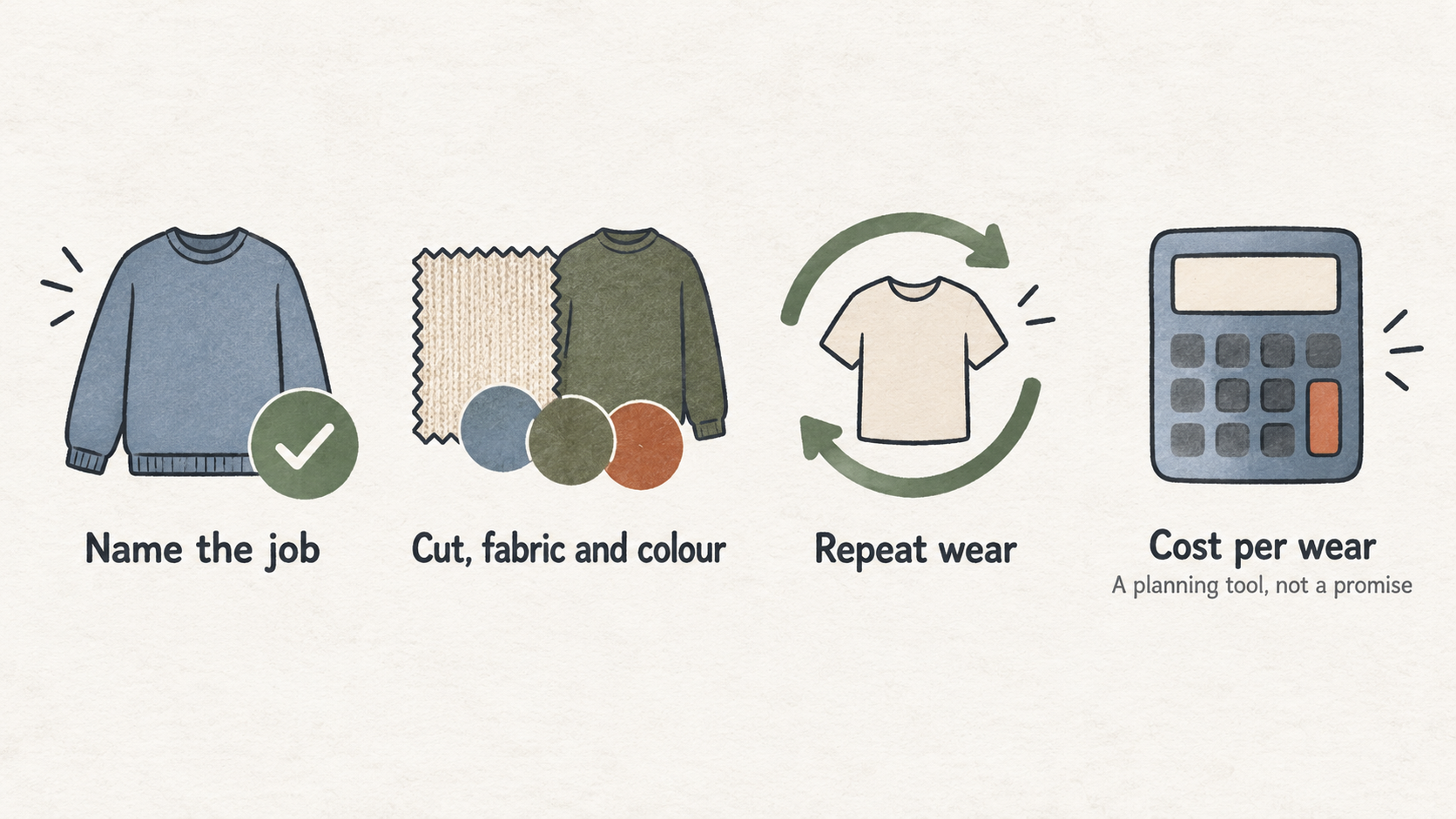
Before comparing tabs or waiting for a deeper reduction, name the job the item needs to do. “Everyday layer for commuting”, “durable overshirt for weekends”, or “wet-weather shoe for regular walks” is more useful than “nice piece at a good price”. A clear job makes it easier to judge whether the cut, fabric and colour will earn repeat wear.
Cost per wear is a planning tool, not a promise. Divide the sale price by a conservative estimate of how often you expect to wear the item. A £120 jacket worn sixty times has a lower planned cost per wear than a £65 jacket worn five times, but only if both estimates are believable. Be cautious with occasions you have not actually scheduled, trend-led colours that do not work with your existing wardrobe, and pieces that require a different base layer or footwear to be useful.
Use three quick questions:
- Can you name at least three outfits you already own that work with it?
- Will its weight, protection or silhouette suit your normal week rather than an imagined version of it?
- Would you choose it again after allowing for cleaning, repairs or an exchange?
This approach also avoids false precision. You do not need to predict an exact number of wears. You only need enough evidence that the item is likely to become a regular choice. If you cannot explain when you would use it, put it on a watchlist rather than treating urgency as value.
For more wardrobe-planning prompts, see Building a Versatile Streetwear Wardrobe.
Check Materials, Construction and Care Before You Buy
Materials and care instructions shape the real cost of ownership. Read the product description and label information before checkout, then compare them with the intended use. A light cotton layer may be right for indoor and mild-weather wear but not for a job that requires dependable rain protection. A technical shell may be useful only if you are willing to follow its washing and reproofing guidance. The point is not that one fabric is universally better; it is whether the item’s demands match your routine.
Pay attention to construction details that affect your use case: pocket placement, adjustability, lining, closure type, reinforcement and the way seams or panels may sit when you move. Product pages can help you identify these features, but they are not a substitute for checking measurements and the exact care label.
Care is particularly important with dyed garments and denim. Carhartt WIP says that many of its dyed items should be washed before first wear and directs customers to the individual washing instructions; it also says this does not apply to rigid or rinsed denim, while rigid denim requires special care. That is a useful reminder to treat the care instructions for the specific piece as part of the purchase decision, not as generic advice for all streetwear. Carhartt WIP FAQ
A sale price can therefore be misleadingly low if an item is likely to be left unworn because it is hard to maintain. Conversely, an item with straightforward care may deliver better long-term value even when its discount is smaller. If the retailer does not provide enough material, care or condition information to make a practical judgement, waiting is reasonable.
For a fabric-by-fabric planning framework, see Streetwear Fabric Care Guide.
Treat Fit Risk as Part of the Price
Fit uncertainty is an ownership cost. It can lead to an item that stays unworn, a return that takes time and money, or an exchange that is no longer available when sale stock runs out. A deep reduction does not compensate automatically for a silhouette you cannot assess.
Check the retailer’s measurement method, compare the listed garment dimensions with a similar item you own, and allow for the way you plan to layer it. For footwear, use the brand’s size guidance and consider socks, insoles and the type of walking you expect to do. Product photos can show styling, but they rarely answer every question about shoulder width, rise, leg opening or volume through the toe box.
Return conditions are part of this calculation. UK online customers generally have a 14-day period after receiving an item to tell the trader they want to cancel, followed by a further 14 days to return it; the applicable position can depend on the purchase and any exception. Customers may handle goods as they would in a shop, but use or damage can affect what is refunded. GOV.UK: accepting returns and giving refunds
Do not assume every heavily reduced item is non-returnable, and do not assume every retailer’s voluntary policy is identical. Read the terms applying to that item and channel before buying. When the measurement information is weak and the route back is restrictive, the better price is often the one you do not pay yet.
Use How to Measure Streetwear Fit before placing an uncertain order.
Read Returns Terms Before Treating a Sale as a Saving
 Separate statutory rights from a retailer’s own returns policy. The statutory baseline addresses legal protections, including cancellation rights for many distance purchases and remedies where goods are faulty, not as described or do not do what they are supposed to do. A retailer may also offer a voluntary returns window that is longer or operationally easier, but that policy needs to be checked for the exact territory, item and purchase channel. GOV.UK: accepting returns and giving refunds
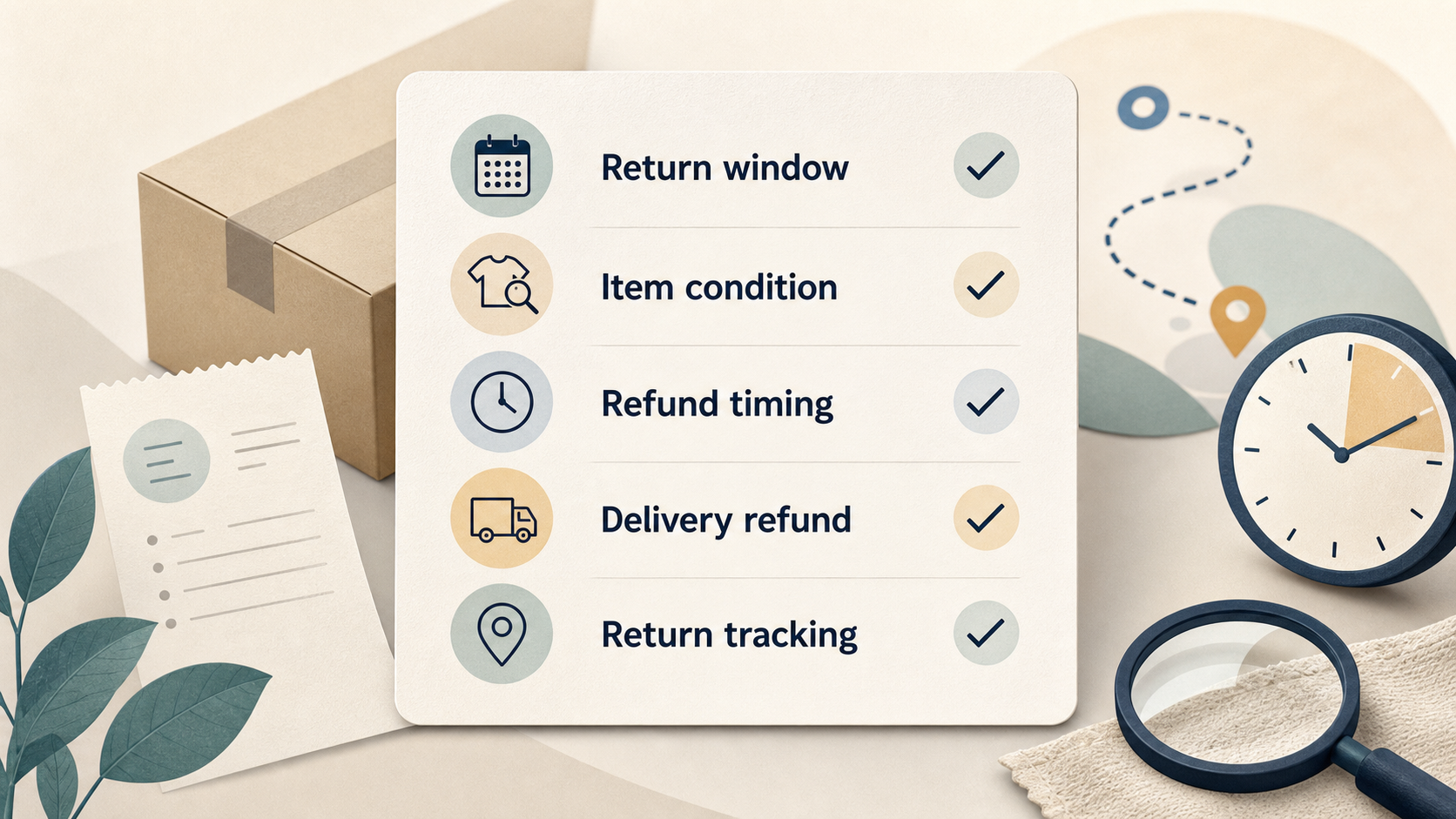
Before checkout, check five points: the return window; whether the item must be unworn, labelled or in original packaging; who pays for return postage; how the refund is processed; and whether you can track the return. Save the relevant policy page and your order confirmation, especially for a limited sale.
Carhartt WIP’s Great Britain FAQ provides one example of a retailer-specific policy: it says items may be returned within 30 days when its return conditions are met, including being unworn, labelled and in original packaging, and describes mail, store and digital-return routes. That is useful context for a Carhartt WIP order, but it should not be used as a proxy for another seller’s terms. Carhartt WIP FAQ
If the item is being bought mainly to test an unfamiliar cut, return convenience matters more than a few extra percentage points. A no-drama return process can make a reasonable sale genuinely lower risk; a difficult one can erase the apparent saving.
Read the wider guide to UK Online Shopping Returns before ordering.
Compare the Ordinary Price and the Alternatives
A crossed-out price is a starting reference, not proof of a unique opportunity. Establish what the item normally costs using reliable, current product or retailer information where available. Then compare credible alternatives: the same model in another colour, a similar piece that meets the same need, or the possibility that your existing wardrobe already covers it.
Keep the comparison like-for-like. Compare similar material, protection, construction, condition and return access rather than just comparing the lowest number. A cheaper alternative that cannot be returned or does not meet the intended use is not necessarily better value. Likewise, an old product page, a search snippet or an unavailable retailer page should not be treated as confirmation of a current price or policy.
The Patagonia Europe page supplied for this guide was temporarily routing visitors to a holding page rather than presenting usable current returns or pricing information. That is a good example of why interrupted brand pages should prompt a pause, not a conclusion. Verify current details directly before relying on them. Patagonia Europe page
A practical comparison sequence is: confirm the ordinary price where possible; compare only realistic alternatives; then subtract predictable costs such as return postage, cleaning, alterations or a likely replacement purchase. Finally, add a fit-risk adjustment. If you cannot verify a high-risk input, you do not need to force a verdict—watch the item and revisit it when better information is available.
Try How to Track Clothing Prices and Best Time to Buy Outerwear for a less hurried comparison process.
A Practical Sale-Value Checklist
Use this checklist before you buy:
- Buy when the item has a clear use, acceptable fit confidence, practical care requirements, a verified price context and return terms you understand.
- Watch when the item is promising but you need a measurement, a current policy confirmation, or a better comparison before deciding.
- Skip when you are relying on the discount to justify uncertain fit, unsuitable maintenance, weak product information or a return process you would not realistically use.
For online purchases, keep the statutory and voluntary-policy questions distinct. GOV.UK says online, mail and telephone customers have a limited cancellation right in many cases, while retailer policies can set their own additional terms and process. Check the exact policy before relying on either. GOV.UK: accepting returns and giving refunds
This is deliberately a slower method. Its purpose is not to remove every risk; it is to make the remaining risk visible before money changes hands. The strongest sale decision is often a calm “yes”, a deliberate “not yet”, or a confident “no”.
Save Streetwear Sale Checklist for your next checkout.
Frequently Asked Questions
Do sale items have the same return rights when bought online in the UK?
A sale label does not by itself remove statutory protections. GOV.UK says online, mail and telephone customers generally have a limited period to cancel a non-faulty order: tell the trader within 14 days of receiving it, then return it within a further 14 days. Exceptions can apply, so check the purchase terms and the item category. Retailers can also offer their own voluntary policy alongside those rights. GOV.UK: accepting returns and giving refunds
Does a bigger discount always mean better long-term value?
No. A larger reduction can still be poor value if the item has no clear use, does not fit, is hard to care for or is difficult to return. Compare the sale price with expected use, the ordinary price where you can verify it, and credible alternatives—not with the percentage alone.
How should care instructions affect a streetwear sale decision?
Treat them as part of the total ownership cost. Check the individual instructions before buying and ask whether you will follow them. Carhartt WIP notes that many dyed garments should be washed before first wear and that rigid denim needs special care, illustrating why garment-specific guidance matters. Carhartt WIP FAQ
When is it better to wait for another reduction?
Wait when a high-risk fact remains unverified: measurements, condition, current return terms, ordinary price or whether the item actually fills a wardrobe need. Waiting is not a missed saving when it prevents an unworn purchase. If the item sells out, use the result to refine what you will look for next time rather than treating it as proof that you should have bought immediately.
Related reading
- Patagonia review: fit, materials, repair support, and who it suits
- Carhartt WIP review: jacket fit, utility, care, and UK returns
- How streetwear and technical apparel should fit, feel, and hold up over time
- How to verify genuine streetwear deals, resale listings, and return protection
Editorial information: About our editorial team · Read our editorial policy · Read our affiliate disclosure.